
The smell is unmistakable. Musty, faintly earthy, and it comes back every morning before the aircon warms the room. You've checked the obvious spots, the bathroom grout, the bottom of the wardrobe, the patch behind the bed, and found nothing. So you assume it can't be serious.
It usually is. In Singapore's climate, where relative humidity sits above 80% for much of the year and concrete walls trap condensation behind furniture and finishes, mold colonies routinely establish themselves in spaces a homeowner or facilities manager simply cannot see. The visible surface is rarely where the problem lives.
That gap, between "I don't see anything" and "there's significant mold growth inside the wall", is exactly what a professional mold inspection is designed to close.
Why this matters: Hidden mold inside walls, under flooring and behind skirting is common in Singapore's humid climate, and it stays invisible until an instrument-led inspection finds it.
Highlights
- Mold commonly grows inside wall cavities, under vinyl flooring and behind skirting boards, invisible to any visual check.
- Singapore's year-round humidity and sealed, air-conditioned interiors create ideal conditions for hidden mold to establish and spread.
- A professional mold inspection uses thermal imaging cameras, calibrated moisture meters and air sampling to locate colonies the eyes cannot reach.
- Our in-house technicians are accredited by the RIA, IAQA and IICRC, the same certifications used by remediation professionals worldwide.
- Confirming hidden mold before remediation means the work targets the real source, not just the visible surface.
Why visual checks miss most of the problem
A homeowner's visual inspection, and, honestly, many a quick quote visit from a less thorough contractor, covers what is accessible and obvious. Exposed wall surfaces, bathroom grout, ceiling tiles, the underside of a kitchen cabinet. These are the places mold appears when the problem is already advanced.
The more common scenario, especially after a slow leak behind a wall or water ingress through a poorly sealed window frame, is that the mold colony is three centimetres inside a plasterboard cavity. Or underneath a vinyl floor laid on a concrete screed that never fully dried after a pipe repair. Or in the first 20mm of a timber skirting board that absorbed moisture from a damp concrete wall.
None of these are visible. All of them produce the musty smell that makes an occupied room feel wrong.
What mold needs to grow out of sight
Three conditions create hidden mold in Singapore buildings:
- Moisture at the source: a slow leak, condensation on cold pipework, rising damp from a concrete slab, or water ingress through a gap in the facade.
- An organic substrate: plasterboard paper, timber framing, MDF cabinetry, the adhesive under vinyl flooring, even the dust layer inside an air duct.
- Darkness and limited airflow: conditions that any wall cavity, floor void or enclosed cabinet provides by default.
Singapore's climate supplies moisture readily and consistently. Once the other two conditions are in place, and in an HDB flat, a condo or a sealed office, they usually are, mold does not need much time to establish a significant colony.
The instruments that find what eyes cannot
A professional mold inspection does not rely on sight alone. The methodology that reliably identifies hidden mold uses three instrument types, each answering a different part of the question.
Thermal imaging cameras
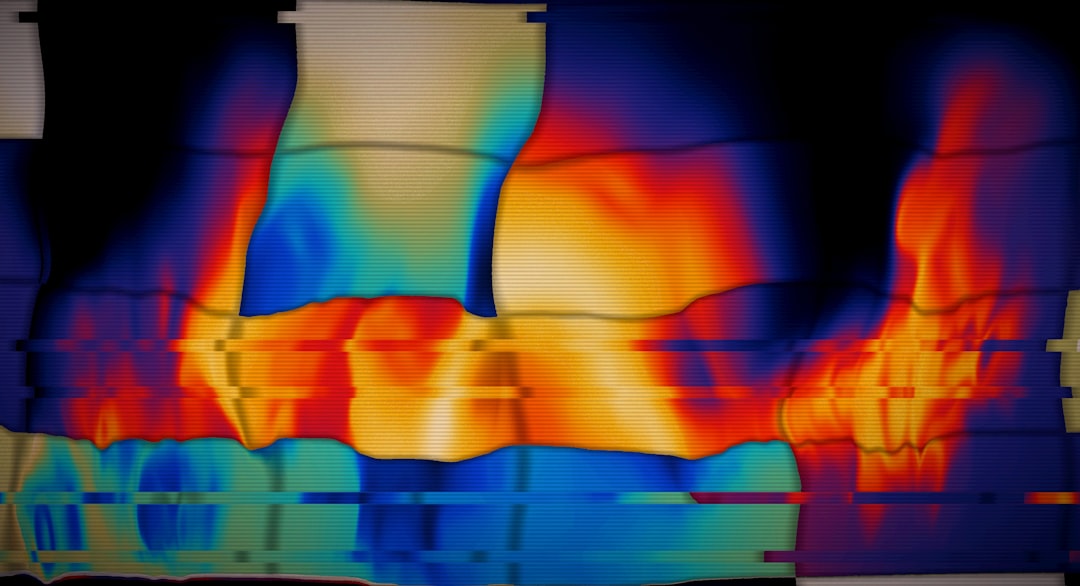
A thermal camera reads surface temperature variation across a wall. Where moisture has infiltrated behind plasterboard or under a tile, the evaporative cooling effect creates a temperature differential that appears as a cold patch on the camera's display. This shows up clearly even when the surface itself looks dry and undamaged.
Thermal imaging is particularly useful in Singapore's sealed, air-conditioned buildings: the temperature contrast between a damp interior cavity and a dry wall surface is often large enough to map the exact boundary of a water intrusion without cutting into the wall at all.
Moisture meters
A calibrated moisture meter measures the water content of a material, plasterboard, timber, concrete screed, either by contact pins or by a non-invasive radio-frequency probe. Readings above the material's safe threshold confirm active or residual moisture at a specific point, and a trained technician uses a grid-pattern survey to trace the source and the extent.
This is what turns "there might be damp somewhere in this wall" into "the moisture runs from this point to this point, and the likely source is the pipe joint behind the boxing at floor level".
Air sampling
Where the thermal and moisture survey points to a cavity with probable mold growth, air sampling confirms it. A calibrated pump draws a measured volume of air through a collection cassette, which is then sent to a laboratory for spore identification and count.
The results show not just whether elevated spore levels are present, but which species, at what concentration, and whether the reading is higher inside the suspected area than in a control sample taken from outside. This is also the methodology that verifies a remediation has worked: a post-remediation sample taken after the area is cleared should read at or below background levels.
As the CDC notes in its guidance on mold testing and remediation, thorough visual inspections and musty-odor detection are more reliable initial indicators than air sampling alone, which is why a professional inspection combines all three methods rather than relying on any single one.
What the inspection report tells you
A professional mold inspection is not a pass/fail test. The output is a documented picture of where moisture is present, where mold is likely or confirmed, and what is feeding it. That picture guides remediation, it tells the technician what material needs to come out, what surface needs treatment, and critically, what the moisture source is that has to be fixed before any surface treatment will hold.
Skipping the inspection and going straight to surface treatment is why mold returns. A bleach wipe that looks effective on a skirting board achieves nothing if the plasterboard behind it is reading 35% moisture content and already colonised. The related article on mold removal and remediation covers what the treatment itself involves once the inspection is done.
For Singapore office and facilities managers, the inspection report also serves a practical governance purpose. As Consumer Reports notes, a licensed inspector's documentation of mold growth and its extent provides a formal record, useful when working with building management, contractors or landlords on remediation responsibility.
When to get an inspection versus when to skip straight to remediation
If mold is clearly visible across a large area and the moisture source is obvious, a burst pipe, a flooded floor, an overflowing aircon drip tray, you can move to remediation without extensive diagnostic work. The source is known, the scope is apparent.
An inspection is the right first step when:
- You smell mold but cannot locate the source.
- A previous surface treatment has not stopped the smell or the regrowth.
- You are buying or renting a property and want to know what is inside the walls.
- A water leak has been repaired but you are not certain whether the adjacent materials dried out.
- You need a documented assessment for building management or insurance purposes.
For anything where the extent is unclear, starting with a professional mold inspection saves the cost of treating the wrong area.
What happens after the inspection
Once the inspection report maps the affected zones and the moisture source, remediation can be targeted. Our in-house technicians, accredited by the RIA, IAQA and IICRC, contain the work area, remove mold-affected material at the source, and treat the surface with molecular-level decontamination. Where the air sampling confirmed elevated spore levels, a follow-up air test after remediation documents that the reading has returned to background levels.
Where it fits, a BioProtect antimicrobial coating bonds to the treated surface and keeps self-disinfecting for up to 90 days, buying time while the underlying moisture issue is fixed and the building reaches stable humidity. Related: see why Google, DBS Bank and JW Marriott trust Big Red with their indoor environments.
For spaces where air quality is the broader concern after a mold event, our indoor air quality (IAQ) testing gives a full picture of what is in the air: spores, VOCs, formaldehyde and particulates, before and after the work.
Frequently asked questions
Can I tell if there's mold inside a wall without cutting it open?
Often, yes. Thermal imaging reads temperature differentials through the wall surface that indicate trapped moisture, and a non-invasive radio-frequency moisture meter measures water content without any penetration. Together, these tools can map a moisture intrusion and confirm likely mold growth behind plasterboard or under flooring without destructive investigation in most cases.
How long does a mold inspection take?
For a standard HDB flat or small commercial unit, a thorough instrument-led inspection typically covers the property in two to three hours. A larger commercial floor or a building with multiple suspected zones will take longer. The time is spent on systematic moisture mapping and air sampling, not a quick visual walk-through, so the result is a reliable picture of what is actually there.
Is an air sample test the same as a mold inspection?
No. Air sampling is one component of a full inspection. On its own, a single air sample tells you whether elevated spore levels are present in the sampled location, but not where the mold colony is, what is feeding it, or how far it has spread. A professional mold inspection combines thermal imaging, moisture metering and air sampling to answer all three questions.
What if the inspection finds mold I wasn't expecting?
Results vary depending on how long the moisture has been present and how far the mold has penetrated the material. In most cases, targeted remediation removes it at the source. Where the mold has grown deeply into plasterboard or structural timber, material replacement is sometimes the only reliable fix. The inspection report makes that clear before any work begins, so there are no surprises in scope.
Do I need a mold inspection after a water leak is repaired?
Yes, if there is any doubt about whether the affected materials dried out fully. A plumber repairing a pipe fixes the water source, but plasterboard, timber framing and floor screeds can retain moisture for weeks after the visible leak has stopped. If those materials stayed damp long enough, mold may already be established before the surface looks or feels dry. A post-repair inspection with moisture metering confirms whether the materials are within safe range or whether further drying and treatment is needed.