
The renovation is done. The new tiles are in, the false ceiling is up, the contractors have left. You switch on the aircon for the first time and within minutes there's a fine white haze in the air and a smell you can't quite place, part drywall, part something musty underneath it.
This happens more often than most homeowners realise, and it's not a sign that the reno was done badly. It's a sign that the ductwork and air-handling units were running, or sitting open, through weeks of cutting, drilling, plastering and sanding. Everything that went airborne during the build went somewhere. A lot of it went into your ducts.
Understanding what's actually inside those ducts after a renovation, and how to get it out properly, is worth doing before you spend months breathing recirculated construction debris.
Why this matters: The air you breathe indoors after a renovation may carry construction dust, VOCs and disturbed mold spores until the ductwork itself is cleaned, not just the surfaces you can see.
Highlights
- Post-renovation ducts commonly hold construction dust, drywall particles, VOCs and fungal spores from surfaces disrupted during the build.
- Running the aircon through an uncleaned duct system circulates that debris through every room the system serves.
- Professional air duct and HVAC cleaning uses negative-pressure extraction and HEPA filtration to remove what a wipe-down cannot reach.
- An indoor air quality (IAQ) test measures VOC and particulate levels before and after cleaning, so you can confirm the air is actually clear.
- BioProtect, our EPA-registered NSF-D2 antimicrobial coating, can be applied after cleaning to keep duct surfaces self-disinfecting for up to 90 days.
- In-house RIA-, IAQA-, IICRC- and CRI-accredited technicians; same-day and 24/7 emergency response.
What a renovation actually puts into your duct system
During a typical HDB or condo renovation, your air-handling units and ducts are usually in place throughout the work. False ceilings come down and go back up. Walls are hacked, plastered and skimmed. New cabinetry is drilled in. All of that generates fine particulate matter that travels through the air before settling.
Construction dust and drywall particles
Drywall and plaster dust are some of the finest particles a renovation produces. They stay suspended in the air for hours and, if the air-handling unit is running, or even if it's off with the intake uncovered, a meaningful fraction of that dust gets drawn into the system and deposits on the interior duct walls, the coils, and the fan. Once in there, it doesn't fall out on its own.
VOCs from new materials
Fresh paint, adhesives, timber laminate, vinyl flooring and the sealants used on new cabinetry all off-gas volatile organic compounds (VOCs). In a freshly renovated space, these are at their highest concentration in the first weeks. When the aircon runs, it draws that VOC-laden air through the system and redistributes it. The smell that won't leave a newly renovated room is often partly this: recirculated off-gassing pulled through ducts that haven't been cleaned.
Fungal spores from disturbed surfaces
This is the one most people don't think about. Renovation work often involves opening up wall cavities, lifting old floor screed, or removing ceiling panels. In Singapore's climate, these hidden surfaces frequently carry dormant mold. Hacking and drilling disturbs those colonies and releases spores into the air. If those spores reach the ductwork, which they often do, they have a warm, potentially damp surface to settle on.
Why switching on the aircon makes it worse, not better
The instinct after a renovation is to air everything out by running the aircon hard. That's understandable, but if the ducts haven't been cleaned first, all you're doing is pushing contaminated air through the system and back into the rooms you've just finished.
According to the US EPA, duct cleaning generally refers to the cleaning of heating and cooling system components including the supply and return air ducts, registers, grilles, heat exchangers, coils, drain pans and fans, all the surfaces that construction debris can reach and settle on. Running the system without cleaning these first means every room served by that unit is downstream of whatever accumulated during the build.
The problem with wiping registers and calling it done
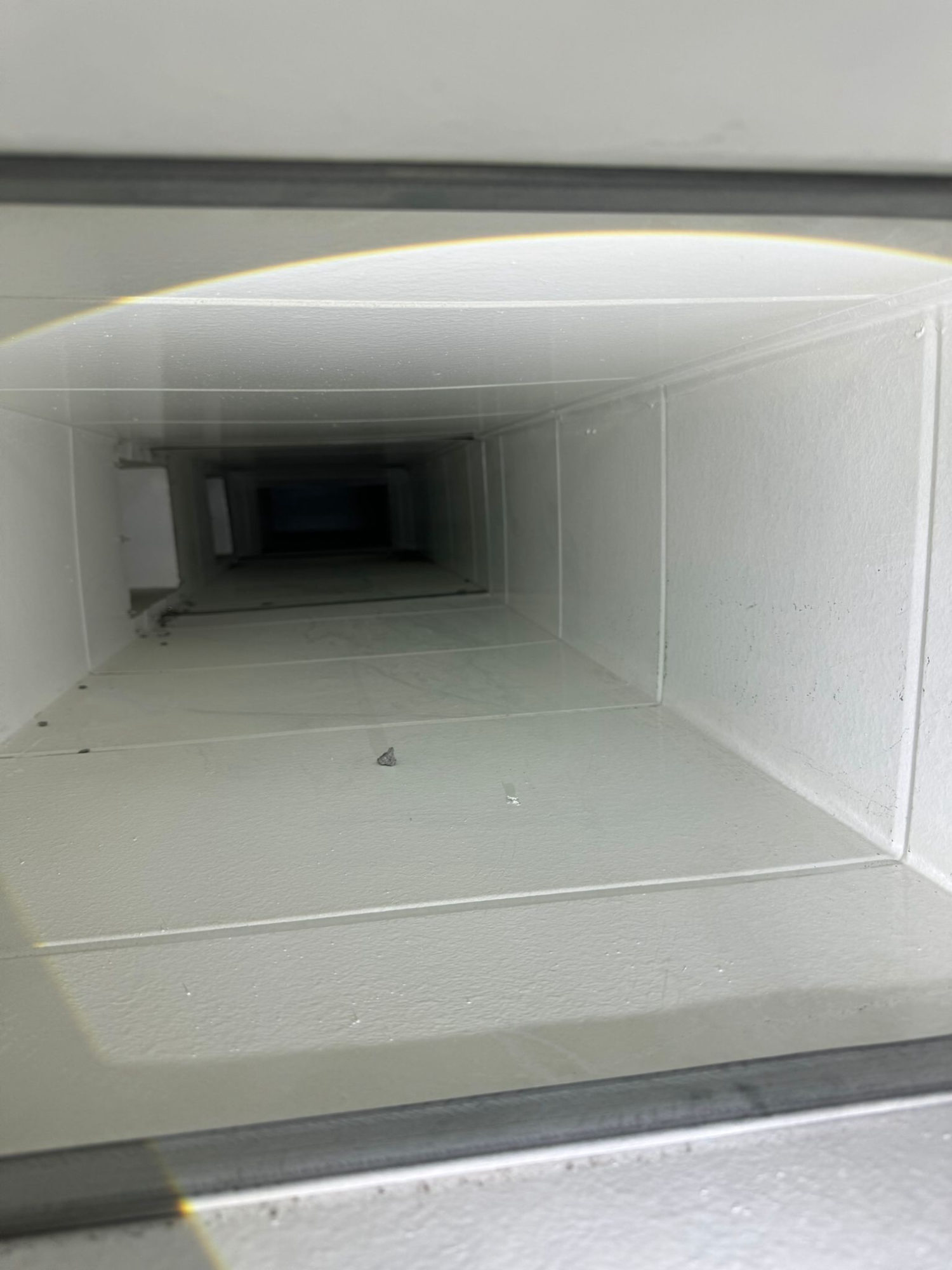
Some homeowners, or their renovation contractors, wipe the visible grilles and registers at the end of a job and consider the system clean. The registers are the last inch of a duct run that might stretch five or ten metres back to the air-handling unit through the false ceiling. The debris that matters is not at the grille, it's coating the interior duct walls and the coil surfaces deeper in the system.
As The Spruce's guide to duct cleaning notes, in HVAC ductwork, many of the contaminants are attached to the sides of the ducts and cannot be dislodged by a standard vacuum at the register opening. Effective cleaning requires equipment that creates a powerful negative-pressure draw through the full duct run, pulling contaminants toward a HEPA-filtered collection point rather than redistributing them.
When the smell tells you something
A dusty, chemical or musty smell persisting more than two weeks after a renovation, once all the cleaning is done and the windows have been open, is a fairly reliable indicator that the ductwork is circulating something. A musty note specifically is worth taking seriously, because in Singapore's humidity, mold that established itself in the duct system during the build can begin to grow actively once the space is occupied and the aircon is running regularly.
What professional duct cleaning actually involves
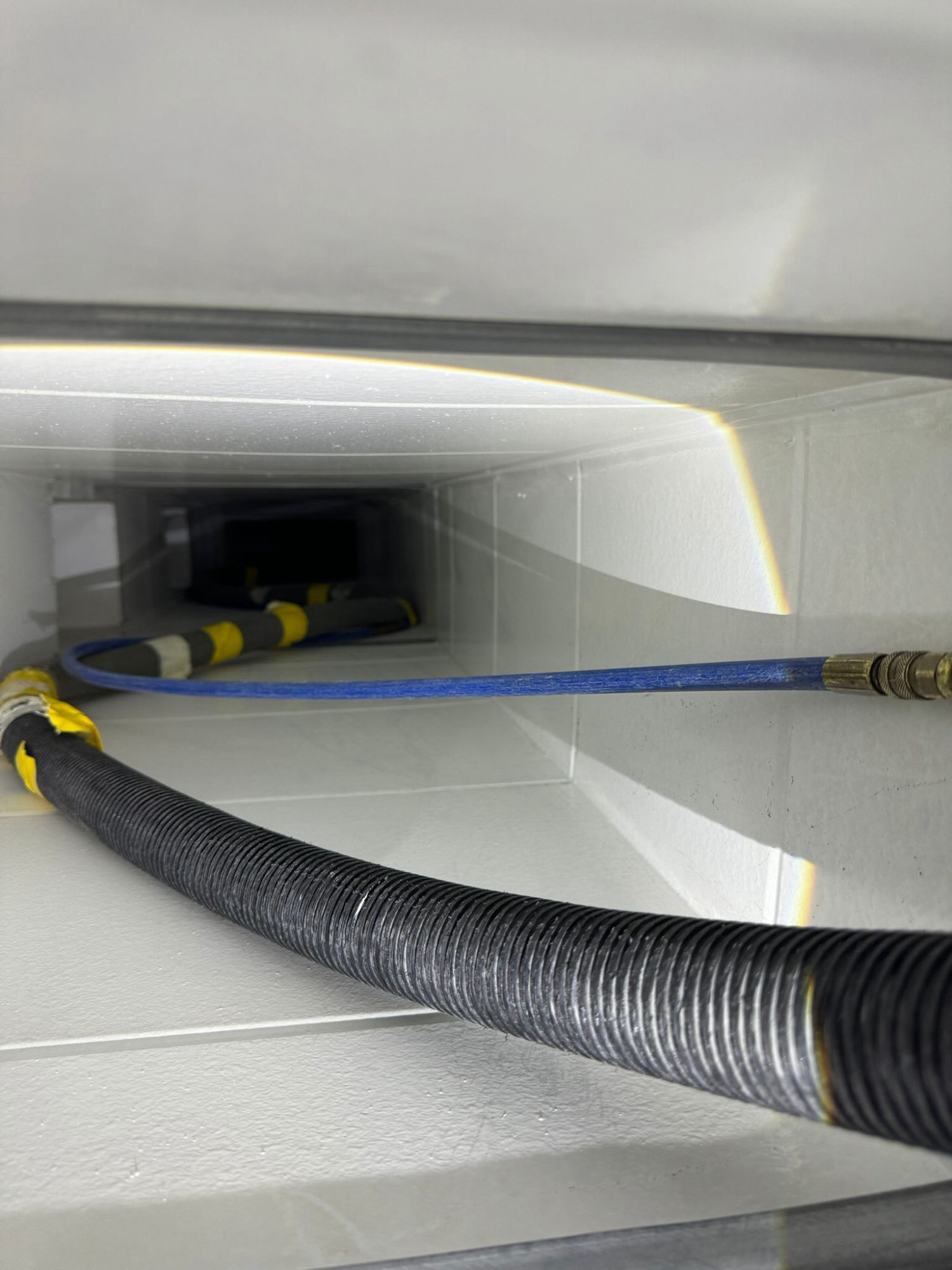
Professional air duct and HVAC cleaning is not the same as a contractor wiping down the visible registers at handover. The process involves containing the duct system, connecting high-powered negative-pressure extraction equipment, and physically agitating the interior surfaces of the ducts while the vacuum draws the loosened debris into a sealed HEPA-filtered collection unit, so the contaminants come out of the system, not back into the room.
For a post-renovation clean, this typically means:
- Inspecting the duct interior before cleaning to assess what has accumulated and whether there is visible mold or moisture
- Sealing off supply and return registers to create an effective negative-pressure draw
- Agitating and extracting debris from the full duct run, the coil, the drain pan and the fan
- Applying an antimicrobial treatment to the cleaned interior surfaces where mold risk is assessed as elevated
Where mold is confirmed during the inspection, the work connects naturally to mold removal and remediation for the source, because cleaning the duct without addressing mold on the surfaces that feed into it just resets the problem.
When an IAQ test adds value
A post-renovation space is one of the clearest use cases for an indoor air quality (IAQ) test. VOC levels, particulate counts and airborne spore concentrations can be measured before cleaning to establish a baseline, and then again after to confirm the result. That gives you an objective record, not just a visual check. For families with young children moving into a newly renovated home, or for facility managers handing over a refurbished commercial space, that documented confirmation matters.
BioProtect after the clean
Once the duct system is clean, BioProtect, the EPA-registered, NSF-D2 quaternary organo-silane antimicrobial coating, can be applied to the interior duct surfaces. It bonds to the surface at a molecular level and keeps self-disinfecting for up to 90 days, which gives the cleaned system a measure of protection during the period when the space is still off-gassing and settling. It contains zero triclosan or heavy metals and is rated safe for food-contact surfaces.
Related: see why Google, DBS Bank and JW Marriott trust Big Red with their indoor environments.
What you can do yourself, and when to call a professional
There are things worth doing on your own after a renovation: wipe all visible surfaces including the registers and the area around the grilles, run the aircon on fan-only mode for a short period with windows open if your unit allows it, and change or clean your aircon filters. These steps help, and they're the right place to start.
But they don't reach the interior of the duct run. If the renovation was substantial, a full hacking of walls, new false ceilings, significant carpentry, and particularly if there's a persistent smell or visible dust being emitted from the registers when the unit runs, the interior of the duct system needs professional extraction equipment to be properly cleared. That's not a case where a longer DIY effort closes the gap; the equipment required creates suction and airflow that a household vacuum simply cannot replicate through several metres of ductwork.
Honestly, the right time to clean the ducts is before you move back in and before you spend weeks breathing what the renovation left behind. After the fact works too, but the earlier the better.
Frequently asked questions
How soon after a renovation should I have the air ducts cleaned?
Before you move back in, if possible. Once the renovation is complete and the gross construction debris has been cleared, having the duct system cleaned before regular occupation means you're not recirculating construction dust and VOCs through the space from the first day. If you've already moved in, cleaning the ducts as soon as you notice persistent dust or smell is the next best step.
Can't I just change the aircon filter instead?
The filter catches a portion of what the air carries, but it doesn't clean the interior walls of the duct run, the coil or the fan, all of which can hold construction debris and, in humid conditions, support mold growth. A new filter on a dirty duct system still pushes air over contaminated surfaces before it reaches the filter. Both steps matter; they're not interchangeable.
Will the duct cleaning remove the post-renovation smell?
In most cases, yes, substantially. Construction dust, VOCs from new materials and the musty note from disturbed mold surfaces all contribute to that post-renovation smell, and cleaning the duct system removes the mechanism that keeps recirculating them. An IAQ test before and after confirms the VOC and particulate reduction. Some off-gassing from new furniture and finishes continues independently of the ducts and takes time to dissipate regardless.
Is the cleaning process disruptive or messy?
A professional clean uses negative-pressure extraction, meaning the debris is drawn toward a sealed collection unit outside the room rather than redistributed into the space. The registers are sealed during the process. Most residential duct cleans in a standard HDB or condo take a few hours. You don't need to vacate the property, though we'd normally advise keeping children and pets clear of the work area while the technicians are on site.
Does Big Red clean ducted aircon systems as well as central HVAC?
Yes. We clean split-system and ducted residential aircon, as well as the central air-handling units and duct networks in commercial and institutional buildings. The approach and equipment scale with the system; contact us for an assessment of your specific setup.