
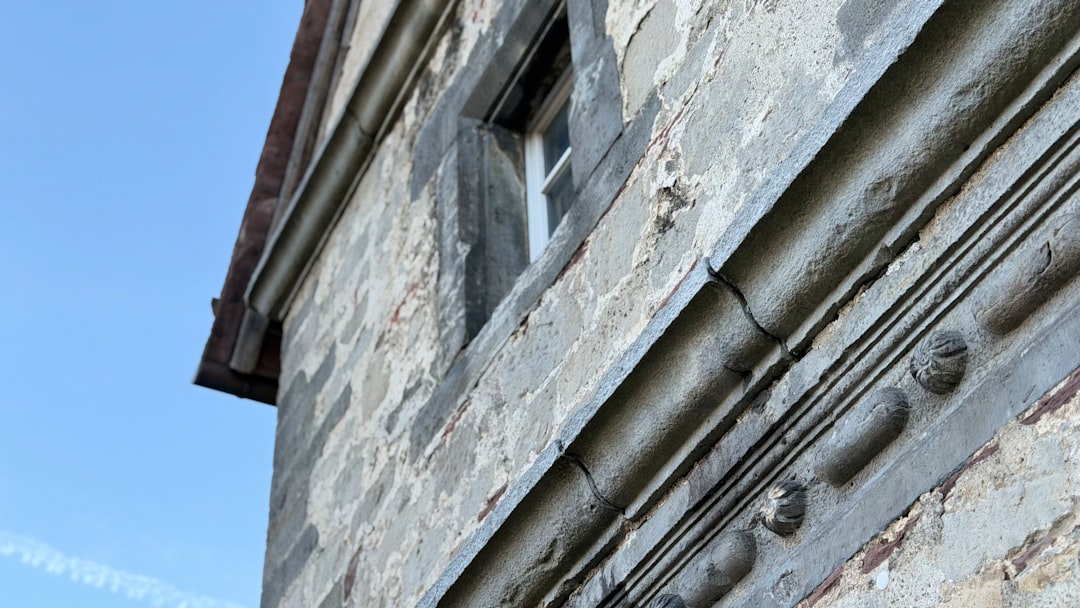
The pressure wash is done, the external walls look clean, and six months later the black streaks are back. If that cycle sounds familiar, you are not dealing with a cleaning problem. You are dealing with a biology problem that no amount of high-pressure water alone will solve.
For building managers and MCST committees in Singapore, this matters because the exterior shell and the interior environment are not separate systems. Mold and algae colonies on a façade generate spores. Those spores travel through gaps around windows, ventilation grilles and construction joints into occupied floors. The result is elevated spore counts in the air and, often, interior mold growth on walls, ceiling tiles and ducting, none of which a façade contractor will ever find.
Building façade cleaning in Singapore is a regulatory requirement and a maintenance routine. What it is not, on its own, is an indoor environment solution.
Why this matters: Mold and algae on a building's exterior shell are live colonies that generate spores, and those spores travel inside, degrading indoor air quality and seeding interior mold growth that a façade wash alone will never reach.
Highlights
- Singapore's humidity and monsoon seasons let mold and algae regrow on external walls within months of cleaning if the root colonies are not treated.
- Exterior mold drives spores into occupied floors through gaps, grilles and construction joints, raising indoor spore counts and seeding interior mold.
- An indoor air quality (IAQ) test measures airborne spore levels before and after remediation, confirming the real condition of the indoor environment.
- Professional mold inspection locates interior mold growth that originates from façade moisture ingress, the part a pressure wash never addresses.
- BioProtect, our EPA-registered, NSF-D2 antimicrobial surface coating, bonds to treated surfaces and keeps self-disinfecting for up to 90 days.
What a façade wash actually cleans, and what it leaves behind
A standard building façade cleaning removes the visible layer of mold, algae, dirt and atmospheric staining from the external surface. Done well, with the right biocide and correct dwell time, it clears the surface growth. Done as a pressure wash alone, it spreads live mold spores across the façade and into the surrounding air before they are rinsed off.
Either way, the result is the same on one count: the moisture that fed the growth is still there. Singapore's external walls, particularly the north-facing elevations and any surface shaded by neighboring blocks, stay damp for long stretches. Mold and algae do not need much. A surface that stays above roughly 60 percent relative humidity is enough for regrowth to begin within weeks.
The part that gets missed: moisture ingress and construction joints
Façade mold and algae thrive where there is a water source, and on older HDB blocks, condominiums and commercial buildings, that source is often a slow water ingress through cracked sealant joints, spalled concrete or failed waterproofing at parapets and window reveals. The external cleaning removes the symptom. The water pathway stays open.
Once water is moving through the external shell, even slowly, it reaches the internal substrate: the back of a plasterboard wall, the top of a false ceiling, the inside of a structural column cladding. Interior mold follows, often invisible until a ceiling tile sags or a musty smell from the aircon becomes impossible to ignore.
The regulatory picture for façade inspection in Singapore
Under the Building Control Act, building owners are required to carry out periodic façade inspections using a qualified person. The inspection requirement is separate from cleaning: its purpose is to identify defects, including water ingress points, spalling concrete and failed sealant, that create exactly the moisture pathway described above. A cleaning contract that does not feed into a defect-remediation plan leaves those pathways open.
Façade work in Singapore also carries a workplace safety dimension. The Ministry of Manpower has previously suspended façade cleaning works at major commercial buildings over safety concerns, a reminder that this is regulated, risk-bearing work that demands properly accredited contractors and documented safe work procedures.
How exterior mold becomes an interior air quality problem
Mold reproduces by releasing spores into the air. A colony on an external wall is doing this constantly, and the concentration spikes when the surface is disturbed, by rain, wind, or a pressure wash. The spores are small enough to travel through any gap between the exterior and interior environments.
In practice, the entry points on a typical Singapore building include:
- Failed or ageing sealant around window frames and curtain wall panels
- Ventilation grilles and aircon condensate drain outlets that open to external air
- Construction joints and expansion joints with cracked or missing filler
- Penetrations for pipes, cable trays and mechanical services that were not fully sealed on installation
Once inside, spores settle on any surface that offers moisture and an organic substrate: paper-faced plasterboard, ceiling tiles with a cellulose core, fabric partition panels, HVAC duct lining. The indoor mold colony that a facility manager eventually notices on a meeting room wall often started outside.
What an IAQ test reveals that a visual inspection cannot
Airborne mold spore counts are invisible. A room can look clean and still carry a spore load that a properly conducted indoor air quality test would flag as elevated. Testing before and after remediation gives you a number, a before and after, rather than an opinion. It also identifies which species are present, which matters when a building owner or MCST needs to document the condition of the building and demonstrate that remediation was effective.
We carry out IAQ testing using calibrated air sampling equipment, and our technicians are accredited by the IAQA (Indoor Air Quality Association) and the IICRC (Institute of Inspection, Cleaning and Restoration Certification). The results are objective and documented.
What the right response to a façade mold problem looks like
Building façade cleaning in Singapore is a necessary starting point, but for a building that has recurring mold growth on the exterior, the right response covers the full chain:
|
Stage |
What it addresses |
What to look for |
|---|---|---|
|
Façade cleaning with biocide treatment |
Surface mold and algae colonies |
Proper dwell time for the biocide, not just pressure washing |
|
Façade inspection (BCA-required) |
Defects: cracked sealant, spalling, failed waterproofing |
Water ingress pathways that will feed regrowth |
|
Interior mold inspection |
Mold growth inside walls, ceilings and duct systems seeded by exterior moisture |
Musty odors, staining, damp patches on interior surfaces |
|
IAQ testing |
Airborne spore counts in occupied areas |
Elevated levels that persist after surface cleaning |
|
Mold removal and remediation |
Mold at the source in porous and structural materials |
Molecular-level decontamination, not surface wiping |
|
BioProtect antimicrobial coating |
Ongoing surface protection after remediation |
EPA-registered, NSF-D2, self-disinfects for up to 90 days |
This is not a case for over-engineering a routine maintenance job. A building with well-maintained sealant joints, no water ingress and a clean exterior inspection result does not need interior remediation. But a building with recurring façade mold, a history of water-related defects, or staff complaints about air quality almost certainly has an interior dimension that a cleaning contract will never surface.
When to call a specialist, and when a façade wash is enough
If the mold on the exterior has been returning within three to six months of each clean, or if there are visible staining or moisture patches on interior walls near the building perimeter, or if the aircon consistently produces a musty smell, those are signals that the problem has moved inside. A mold inspection will confirm whether it has and where.
For a building with no interior symptoms and a well-maintained envelope, a professional façade clean with proper biocide treatment and a follow-up sealant inspection is a reasonable maintenance cycle. The point is to know which situation you are in, rather than assume the exterior is where the problem stops.
After remediation, BioProtect, the BIOPROTECTUs™ System, bonds to the treated surface at a molecular level and keeps self-disinfecting for up to 90 days. It is EPA-registered and NSF-D2 rated, with zero triclosan, heavy metals, arsenic or phenols. On interior surfaces that have been cleared of mold, it extends the protection window while the underlying moisture issue is resolved. Related: see why Google, DBS Bank, JW Marriott and Resorts World Sentosa trust Big Red with their indoor environments.
Frequently asked questions
Why does mold grow back on our building's exterior so quickly after cleaning?
In most cases, the moisture source that fed the original colony was not addressed. Singapore's humidity and shaded or north-facing elevations stay damp long enough for mold and algae to re-establish within months. A cleaning with proper biocide treatment removes more of the colony, but if cracked sealant or failed waterproofing is letting water into the wall, regrowth is almost certain.
How do I know if exterior mold has caused mold inside the building?
The clearest signs are musty odors near perimeter walls or from the aircon system, visible staining or damp patches on interior walls close to the building envelope, and recurring mold on ceiling tiles. An IAQ test measures airborne spore counts and gives you an objective reading. A mold inspection locates the growth itself, including inside wall cavities and above false ceilings.
Is building façade cleaning alone enough to protect indoor air quality?
Not if there are active water ingress pathways. The façade clean removes surface growth, but spores travel inside through gaps and grilles before and during cleaning, and regrowth continues if moisture ingress is not sealed. Interior mold inspection and IAQ testing confirm whether the indoor environment has been affected, and remediation addresses it at the source.
What does professional mold remediation involve for a commercial building?
We contain the work area to prevent spore spread, remove mold at the source using molecular-level decontamination rather than surface wiping, and identify and document the moisture pathway that fed the growth. Where required, we carry out air sampling before and after to confirm the result. The BioProtect antimicrobial coating can then be applied to treated surfaces for ongoing protection.
Can Big Red carry out both the indoor inspection and the IAQ testing?
Yes. We offer mold inspection, indoor air quality testing and mold removal and remediation as separate or combined services, carried out by in-house technicians accredited by the RIA, IAQA, IICRC and CRI. We do not sub-contract. Same-day assessments and 24/7 emergency response are available across Singapore.