
The complaints come in slowly at first. A few staff mention headaches by mid-afternoon. Someone says the air from the aircon smells stale. Then the pattern becomes hard to ignore: absenteeism is up, productivity is down, and nobody can explain why.
This is the scenario that brings most facility managers to us. They have already had the office cleaned. They have checked the aircon filters. But the problem persists, because a standard surface wipe-down addresses none of the real causes: bacteria and mold spores on high-touch surfaces, contamination in the air ducts, VOCs and formaldehyde trapped in a sealed, air-conditioned space.
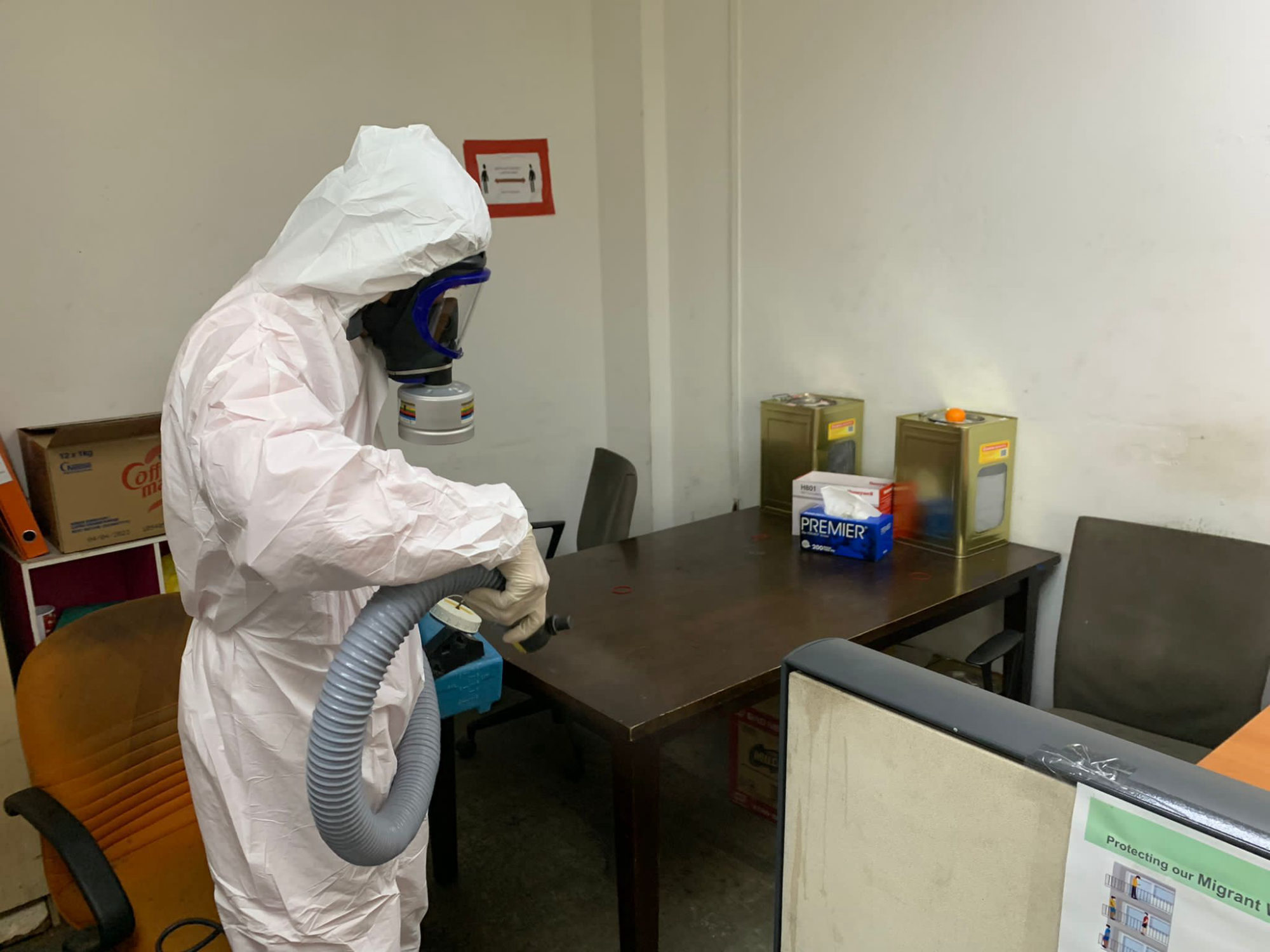
A professional decontamination service works differently from a routine clean. It treats surfaces, air and HVAC systems together, verifies the result with testing, and leaves measurable proof that the contamination has been removed.
Why this matters: An office that cannot pass a basic indoor air quality check is not just uncomfortable, it is losing staff productivity and headcount to a problem that has a documented fix.
Highlights
- Sick building syndrome in Singapore offices is driven by bacteria, mold spores, VOCs and formaldehyde trapped in sealed, air-conditioned spaces.
- A decontamination service covers high-touch surfaces, airborne contaminants and HVAC systems together, not surfaces alone.
- Our hospital-grade disinfectant kills 99.999% of bacteria (including E. coli and Salmonella) in under 60 seconds, Made in USA with zero triclosan or heavy metals.
- BioProtect, an EPA-registered, NSF-D2 antimicrobial coating, keeps surfaces self-disinfecting for up to 90 days after treatment.
- Indoor air quality (IAQ) testing before and after gives you documented proof that contamination levels have dropped.
- In-house technicians accredited by the RIA, IAQA, IICRC and bizSafe3, same-day and 24/7 emergency response available.
What "sick building syndrome" actually means in a Singapore office
Sick building syndrome is a term used when building occupants report consistent symptoms, headaches, fatigue, eye or throat irritation, difficulty concentrating, that improve when they leave the building and return when they come back. The causes are usually a combination of poor ventilation, microbial contamination (bacteria, mold spores), and elevated levels of volatile organic compounds (VOCs) or formaldehyde from furniture, adhesives and cleaning products.
Singapore's climate makes this worse. Offices run their air conditioning year-round, which means windows stay closed and air recirculates. Without regular attention to the HVAC system and a genuine decontamination of surfaces, contaminants accumulate.
The difference between a clean office and a decontaminated one
A standard clean removes visible dirt and dust from surfaces. That is genuinely useful, but it does not:
- Kill bacteria and viruses on high-touch surfaces at a microbial level
- Address mold or mold spores growing in hidden spots, behind panels, in ceiling voids, around condensate drains
- Remove VOCs and formaldehyde from the air
- Clear the contamination inside air ducts and HVAC coils that recirculates through the whole office
A decontamination service addresses all of these. The distinction is method and scope, not just effort.
What a professional decontamination service involves
The scope varies by building, but a thorough decontamination of a Singapore office typically follows this sequence:
|
Stage |
What happens |
What it removes |
|---|---|---|
|
IAQ baseline test |
Air sampling before any work begins |
Establishes spore counts, VOC levels, formaldehyde readings |
|
Mold inspection |
Visual and moisture-meter survey of walls, ceilings, ducts |
Hidden mold colonies and damp that feeds regrowth |
|
Surface disinfection |
Hospital-grade fogging and wipe-down of all high-touch areas |
Bacteria, viruses and surface mold |
|
Air duct / HVAC cleaning |
Mechanical cleaning and antimicrobial treatment of the duct interior |
Dust, mold spores and bacterial colonies recirculating through the air |
|
BioProtect coating |
EPA-registered antimicrobial layer applied to treated surfaces |
Prevents recontamination for up to 90 days |
|
Post-treatment IAQ test |
Air sampling after work is complete |
Documents the reduction in spore counts, VOCs and formaldehyde |
The before-and-after IAQ test is what separates a professional decontamination service from a glorified deep clean. It gives the facility manager documented numbers: what was in the air before we started, and what is there now.
High-touch surfaces: where bacteria concentrate
In any office, the contamination load is heaviest on surfaces that many people touch throughout the day: door handles, lift buttons, shared keyboards, pantry countertops, tap fittings, meeting-room remotes. A hospital-grade disinfectant applied by trained technicians kills 99.999% of bacteria, including E. coli and Salmonella, in under 60 seconds. Our disinfectant is Made in USA, with zero triclosan, heavy metals, arsenic or phenols, which matters for occupied commercial spaces and food-contact surfaces in a pantry or canteen.
After disinfection, the BioProtect antimicrobial coating bonds to both porous and non-porous surfaces. It is EPA-registered and NSF-D2 certified, which means it has been independently verified as safe for food-contact surfaces. The coating keeps self-disinfecting for up to 90 days, so the office is not back to baseline contamination levels within a week of the service.
The HVAC system: the source most office managers overlook
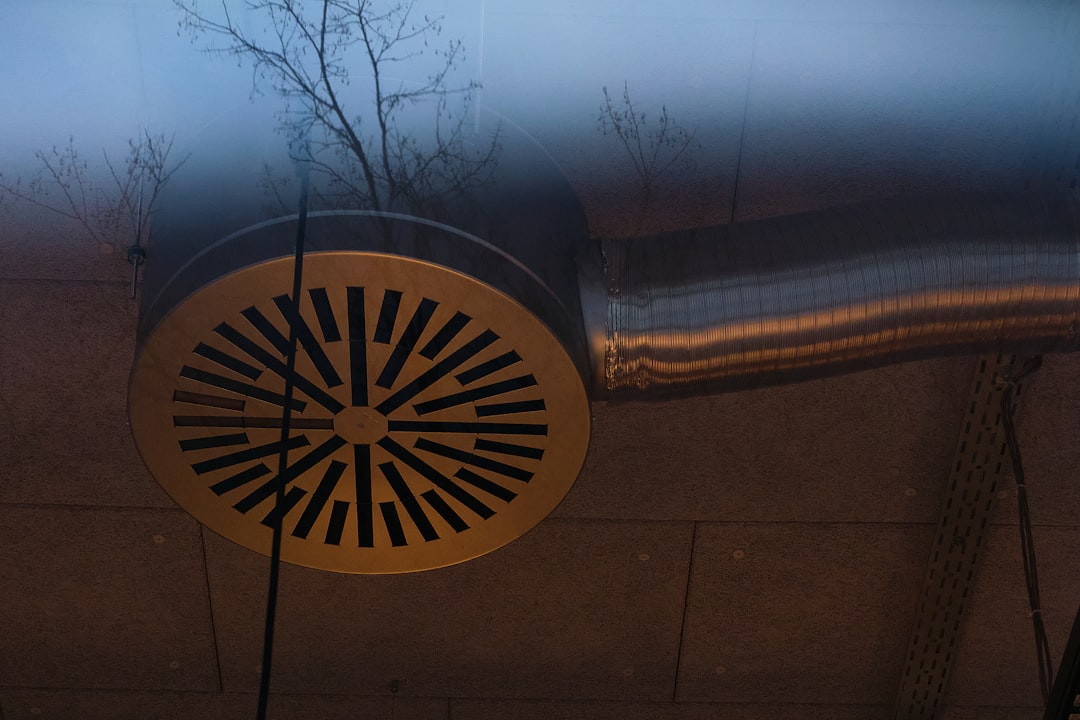
The most common oversight in office contamination is the air duct network. A sealed Singapore office recirculates air continuously. If the ducts carry mold spores, bacteria or accumulated particulate matter, the aircon is effectively distributing the contamination to every corner of the floor.
Air duct and HVAC cleaning is often the intervention that actually shifts the baseline. Technicians use mechanical agitation and extraction to clear the duct interior, followed by an antimicrobial treatment. After the mold inspection and duct clean on a recent commercial engagement, the post-treatment IAQ reading showed a significant drop in airborne spore counts, proof that the complaint about the stale smell from the aircon was not imaginary.
When decontamination is the right call, and when it is not
Not every office problem requires a full decontamination. Here is an honest breakdown:
Start with a standard clean if: the office has not been deep-cleaned in a while, there are no systemic complaints and no visible mold or persistent odor. A good clean followed by improved ventilation habits may be all that is needed.
Commission a decontamination service if:
- Staff are reporting consistent symptoms that ease when they leave the building
- There is a visible mold patch anywhere in the office, or a persistent musty or chemical smell
- The HVAC has not been cleaned in more than 12 months
- The office has recently had a confirmed illness circulate (COVID, influenza, norovirus) and you need documented proof of surface and air treatment
- You have taken over a new premises and do not know its contamination history
A mold inspection is often the right first step if you suspect microbial contamination but are not certain of the source. It tells you whether you are dealing with a surface issue or something that has grown into the building fabric, which determines what level of remediation you actually need.
Honestly, results depend on what the survey finds. Mold that has grown into plasterboard, old water damage behind a false ceiling, or a heavily fouled duct system may need material replacement or multiple treatment rounds, not just a single service. We tell you that upfront.
What proof you get that it worked
A decontamination service that does not include verification is a promise, not a result. The standard we hold ourselves to:
- A written IAQ test report, before and after, showing spore counts, VOC levels and formaldehyde readings
- A mold inspection report documenting what was found and where
- Photographic records of the duct interior before and after cleaning
- A BioProtect application certificate confirming the treated areas and the date of application
For clients in regulated industries, healthcare, food and beverage, hospitality, this documentation also satisfies audit and compliance requirements. Related: see how clients like Google, DBS Bank, JW Marriott and Resorts World Sentosa approach their indoor environment.
If you want to understand more about whether your building's air is the problem, the indoor air quality testing service is a natural starting point before committing to a full decontamination. It gives you the data to make the decision, rather than guessing.
Frequently asked questions
How do I know if my office needs a decontamination service or just a deep clean?
The clearest signal is systemic: staff reporting consistent headaches, fatigue or throat irritation that ease when they leave the building, or a persistent smell from the aircon that a standard clean has not shifted. An IAQ test measures what is actually in the air, spore counts, VOC levels, formaldehyde, and gives you the data to decide, rather than spending on a decontamination you may not need.
Is a professional decontamination service safe to carry out in an occupied office?
For most of the work, yes. Surface fogging and BioProtect application can typically be scheduled around office hours or done overnight. The BioProtect coating is NSF-D2 certified with zero triclosan or heavy metals, so it is verified safe for occupied spaces and food-contact surfaces. We advise on the specific access window needed once we know the scope.
How long does the BioProtect antimicrobial coating last after decontamination?
BioProtect bonds to treated surfaces and keeps self-disinfecting for up to 90 days. After that, a reapplication maintains the protection. For high-footfall offices, quarterly treatment aligned with the IAQ test cycle is a practical schedule.
Can decontamination fix a mold problem inside the ceiling or walls?
Surface mold on non-porous materials is typically removed in a single decontamination treatment. Mold that has grown into plasterboard, insulation or a ceiling void is a remediation job: the affected material usually needs to be removed and replaced, and the moisture source that fed the growth has to be fixed, or the mold returns. A mold removal and remediation assessment will tell you which situation you are in.
How quickly can Big Red respond to an office decontamination request?
Same-day service is available, and we operate 24/7 for emergency decontamination. For planned decontaminations, after a confirmed illness, a renovation, or a new premises fit-out, we typically schedule a mold inspection and IAQ baseline test first so the decontamination scope is based on what is actually there.