
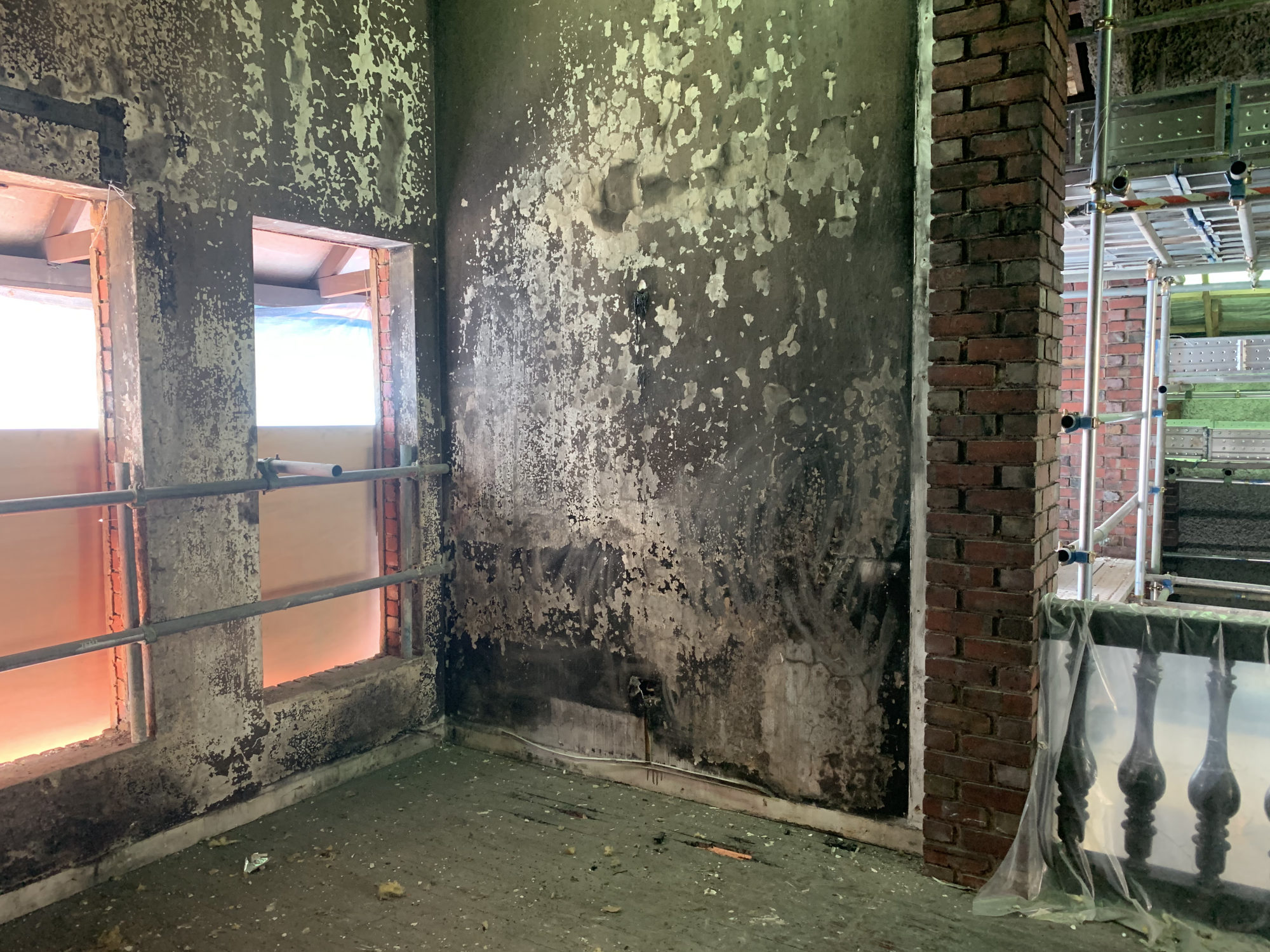
The black patch behind the wardrobe. The musty smell from the bedroom aircon that no amount of cleaning shifts. The peeling paint on the wall that faces the corridor. In Singapore's humidity, these are not cosmetic problems, they're signals that mold may have taken hold somewhere you can't easily reach.
Most homeowners do what seems logical: they look at the wall, maybe dab it with bleach, and try to decide how bad it is. The problem is that what you can see on the surface is rarely the full picture. Mold grows behind plasterboard, inside wall cavities, under skirting boards, and inside ceiling voids, places no visual check will ever reach.
A professional house mold inspection uses tools and methods specifically designed to find what's hidden: moisture meters, thermal imaging, air sampling and a systematic check of every condensation-prone zone in the home. That's what this piece explains, so you know exactly what you're getting before you book one, and why it's the sensible first step before any remediation quote.
Why this matters: A surface wipe-down tells you where mold is visible; a professional inspection tells you where it's living, how far it's spread, and what's feeding it, information you need before any remediation work can be properly scoped.
Highlights
- Mold roots grow into porous materials like plaster and plasterboard, so a visual check only shows the surface fraction of the problem.
- Professional inspectors use moisture meters and thermal imaging to detect damp behind walls, under floors and inside ceiling voids, without cutting anything open.
- Air sampling during a mold inspection measures spore levels in the room, not just on the surface, giving a clearer picture of how far the colony has spread.
- Singapore's sealed, air-conditioned buildings and year-round humidity create the conditions where mold spreads fast behind surfaces.
- A mold inspection is the right first step before a remediation quote, it scopes the problem accurately so no work is undersized or oversized.
What a visual check misses
It seems straightforward: you look at the wall, you see mold, you treat it. But mold is not a stain, it's a living colony with a root structure (called hyphae) that penetrates porous materials. The patch you can see is the fruiting layer. The network underneath reaches into the plaster, the plasterboard and sometimes the timber framing behind it.
The hidden zones in a Singapore home
In HDB flats and condos, the places mold hides most reliably are the ones with the least airflow and the most temperature variation:
- Behind wardrobes and built-in furniture pushed against external or wet-area walls, where condensation collects on the cooler surface.
- Inside bathroom and kitchen wall cavities, where pipe connections weep or grout has failed and water tracks silently down behind the tiles.
- Under raised flooring and behind skirting boards in rooms that flood or stay damp after a pipe leak.
- Inside ceiling voids, especially above a bathroom or below a roof slab that retains heat.
- Around aircon fan coil units and the drainage trays behind them, where drip leaks go unnoticed for months.
- The corridor-facing wall of bedrooms in older HDB blocks, where condensation builds when the outdoor air is warmer and more humid than the cooled interior.
None of these show up in a walk-around with a torch. That's the gap a professional inspection fills.
The tools a professional inspector uses
A professional mold inspection is a structured diagnostic exercise. The inspector is not just looking, they're measuring, mapping and sampling. Here's what each tool actually does.
Moisture meters
A pin-type or non-invasive moisture meter reads the moisture content of a surface or the material just behind it. A trained inspector runs it along walls, floors and ceiling areas systematically, not just the spots with visible staining. A spike in moisture reading behind a clean wall is a strong indicator that water is tracking through the structure, and where there's sustained damp in Singapore's climate, mold follows.
This is why the EPA's mold guidance notes that assessing a mold problem means looking for existing or potential moisture problems, the water source is as important as the mold itself. Treating the mold without finding the moisture is what makes it return.
Thermal imaging
An infrared camera reads surface temperature variation across walls and ceilings. Areas where moisture is present show up cooler than the surrounding dry surface, because evaporation lowers the temperature. In practice, thermal imaging can reveal a water leak tracking down the inside of a wall, a damp patch behind a kitchen cabinet, or a condensation zone above a ceiling, all without drilling a single hole.
It's not a magic camera that sees mold directly. What it shows is the temperature anomaly that points to damp, which is then confirmed with a moisture meter reading.
Air sampling for mold spores
Surface mold and airborne mold spores are two different problems. A wall patch that looks contained may be releasing spores throughout a room, and elevated spore levels in the air are what matter for the health of the indoor environment. An air sample is taken using a calibrated pump that draws air through a collection cassette over a set time. The sample is then analysed at a laboratory to identify the mold species present and the concentration.
This is closely related to what indoor air quality (IAQ) testing measures more broadly, but in a mold inspection context, air sampling is targeted at understanding the spore load in a specific space and whether it's consistent with a contained surface colony or a more widespread problem.
Cavity checks and moisture mapping
For areas where readings suggest a problem but the surface is intact, a trained inspector may use a borescope, a small camera on a flexible probe, to look inside a wall cavity through an existing gap, or recommend opening a small test area. The goal is to map how far the damp and mold have spread before a remediation scope is written, so the work is sized right.
What happens after the inspection
A professional mold inspection produces a findings report: where moisture was elevated, what the air sampling showed, which areas have confirmed surface mold, and which areas show the conditions for mold growth even if it hasn't yet appeared. That report is the basis for a remediation scope.
Why inspection comes before remediation
Skipping the inspection and going straight to remediation is the single most common reason mold comes back. If the moisture source isn't identified and mapped, the remediation targets the visible mold but leaves the conditions that created it. The colony regrows, often in the same spot or somewhere nearby.
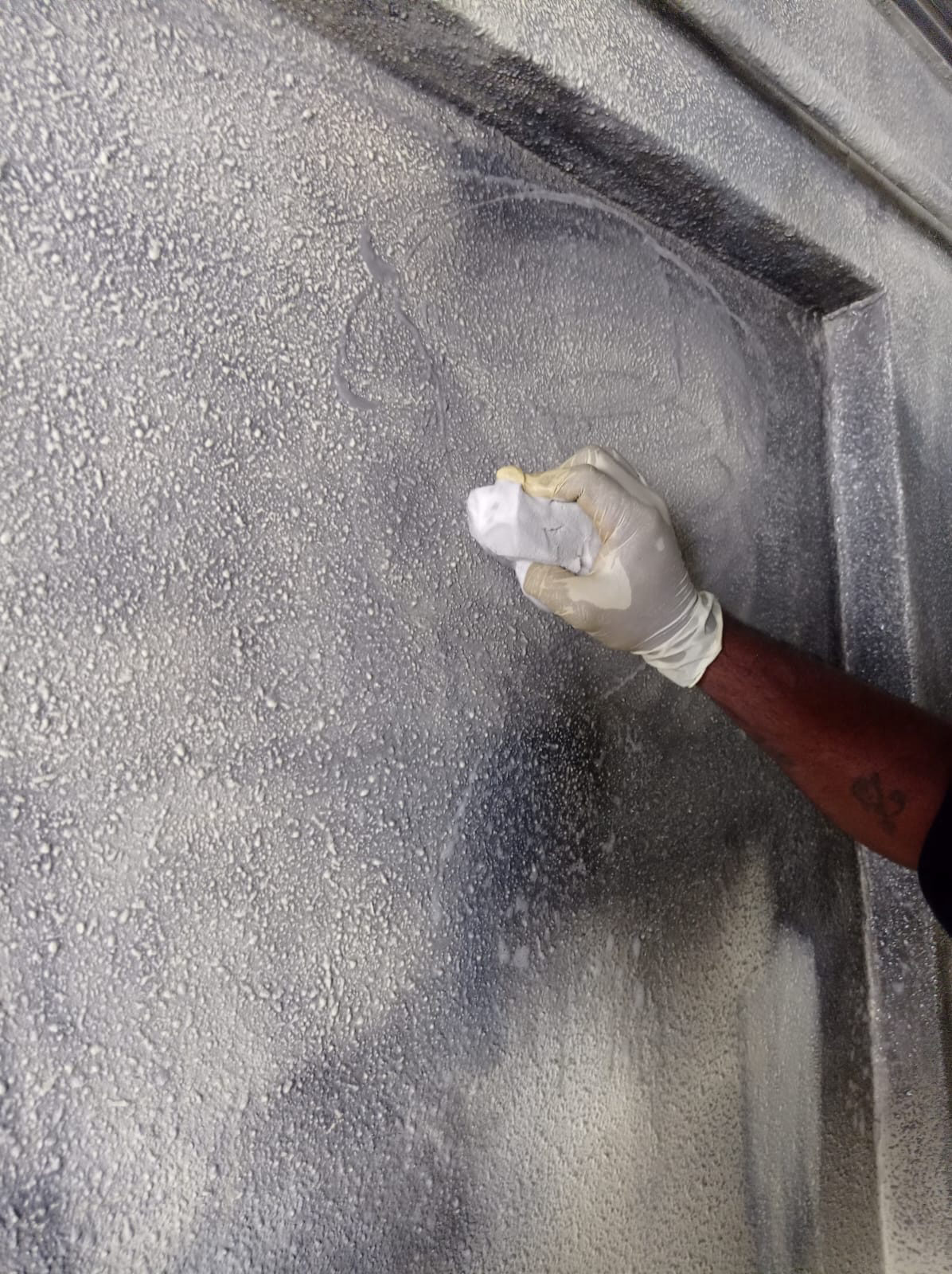
A properly scoped job, based on inspection findings, removes mold at the source, addresses the moisture pathway, and applies surface protection, such as the BioProtect antimicrobial coating, which is EPA-registered and NSF-D2 rated, bonds to the treated surface and keeps self-disinfecting for up to 90 days. Results depend on how far the mold has penetrated and how long the damp has been present: some surfaces are fully cleared, some need material replacement. An honest inspection tells you which situation you're in before work begins.
When you can manage it yourself, and when you can't
Small, isolated patches of surface mildew on a non-porous surface (glazed tiles, a glass panel, a painted wall with no penetration), caught early and with no ongoing moisture source, can often be cleaned yourself with appropriate product and the area kept dry. But if any of the following apply, a professional inspection is the right call:
- The patch is larger than a palm, or keeps returning after cleaning.
- The smell is musty but the source isn't obvious.
- The mold is on plasterboard, timber, ceiling tiles or carpet, all porous materials.
- There's been a pipe leak, flooding or water ingress within the last year.
- The affected room has an occupant who is particularly sensitive to air quality (for example, a young child or elderly person).
- You're about to list or sell the property and want to know its true condition.
For a broader look at what to check after water damage, the guide on inspecting your Singapore home for hidden mold after a leak or flood is a useful companion to this piece.
Big Red Environmental's mold inspection service uses in-house technicians accredited by the RIA, IAQA and IICRC, the three leading bodies in restoration and indoor air quality, with same-day and 24/7 emergency response available.
Frequently asked questions
What does a professional house mold inspection involve?
A professional inspection is a systematic check using moisture meters, thermal imaging and air sampling, not just a visual walk-around. The inspector maps elevated moisture readings across walls, floors and ceilings, takes air samples to measure spore levels, and identifies the source feeding the mold. The findings go into a report that scopes any remediation accurately.
How do I know if I need a mold inspection or just mold removal?
If you already know exactly where the mold is, it's on a small non-porous surface, and you can see the moisture source clearly, removal may be all that's needed. But if the mold keeps returning, the source isn't obvious, or the affected material is porous (plasterboard, timber, carpet), an inspection first is the right call. It prevents remediation that's undersized or misses the real problem.
Can I just use a bleach wipe and skip the inspection?
For a small patch of surface mildew on tiles, a wipe-down can work if the area is kept dry afterwards. For anything on plasterboard, plaster or timber, bleach reaches only the surface, the roots stay in the material and the mold regrows. An inspection tells you whether the mold has penetrated the surface and how far, which is what determines the right treatment.
Will a house mold inspection disturb my home?
In most cases, no. Moisture meters and thermal imaging are non-invasive, the inspector runs them along surfaces without cutting or drilling. If a cavity check is needed, a borescope can usually be inserted through an existing gap. Where a small test opening is needed to confirm a finding, the inspector will discuss it with you first.
How long does a house mold inspection take?
For a typical HDB flat or condo unit, a thorough inspection takes roughly one to two hours. Larger landed properties or cases with multiple affected rooms take longer. The time is driven by how systematically the inspector covers every condensation-prone zone, a quick walk-around is not an inspection.