
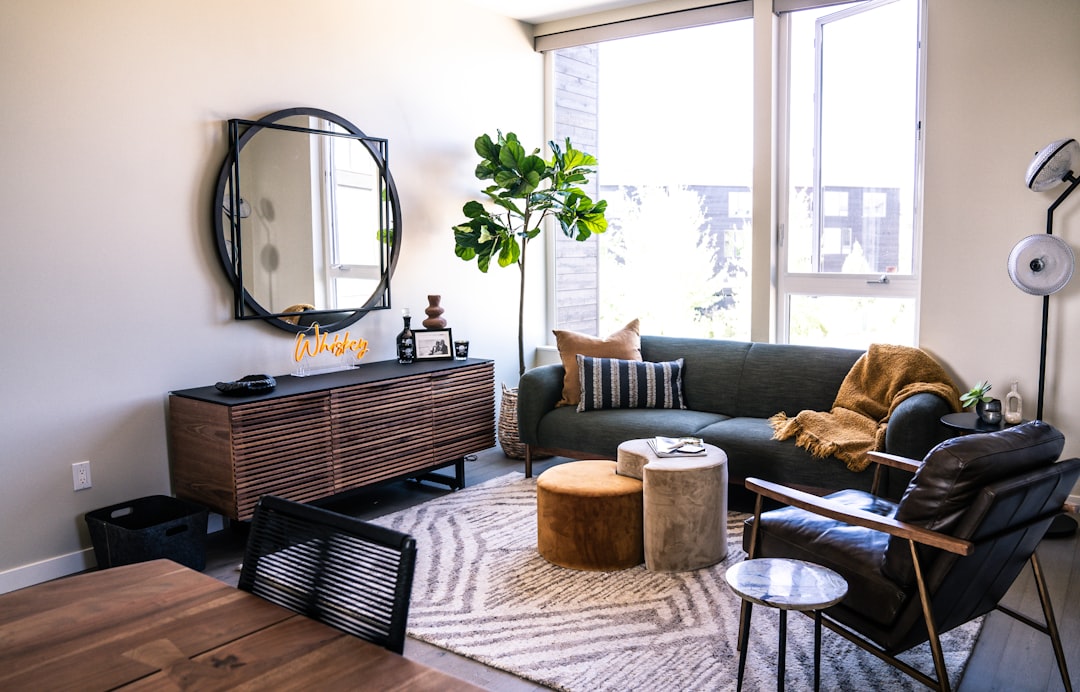
The renovation is finished. The fresh paint looks great, the new flat-pack furniture is assembled, and the laminate flooring is down. But three weeks later, someone in the family keeps waking up with a headache, the baby's eyes are red, and there's still a faint chemical smell you can't quite place.
This is one of the most common calls we get from Singapore homeowners, not mold, not a leak, but the invisible aftermath of a renovation. New materials off-gas, and in a sealed, air-conditioned Singapore home, those gases have nowhere to go.
The problem is you cannot smell your way to a safe level. The smell fades long before the contaminants do. Air quality testing is the only way to measure what's actually in the air, and to know when it's genuinely clear.
Why this matters: In a sealed, air-conditioned Singapore home, formaldehyde and VOCs from new furniture and fresh paint can linger at elevated levels for weeks or months after a renovation, and you can't tell by smell alone whether the air has returned to a safe level.
Highlights
- Post-renovation off-gassing from furniture, paint and laminates raises formaldehyde and VOC levels in the air, often for weeks or months.
- Formaldehyde, TVOC and PM2.5 are the key contaminants an IAQ test measures after a renovation; you cannot detect elevated levels by smell alone.
- Professional indoor air quality (IAQ) testing uses calibrated instruments to give you actual readings, not guesses.
- Big Red's in-house technicians are accredited by the RIA, IAQA, IICRC and CRI, with same-day and 24/7 emergency response.
- Where testing also reveals elevated mold spore counts, a separate risk in humid Singapore, a mold inspection can follow on the same visit.
What's actually in the air after a renovation
Off-gassing is the process by which new materials release chemical compounds into the air. It happens fastest in the first days after installation, but continues at lower levels for far longer than most people expect.
Formaldehyde: the main concern with new furniture
Formaldehyde is the contaminant we find most consistently after a renovation involving flat-pack furniture, MDF, plywood or laminated cabinetry. The adhesive resins used in engineered wood products release formaldehyde as they cure, and in a small, sealed Singapore bedroom or study, concentrations can build up quickly.
It has a sharp, faintly chemical smell at high levels, but at the lower concentrations that persist for weeks, many people notice nothing beyond mild eye irritation or a vague headache they put down to stress or screen time.
TVOCs: the broader family of paint and adhesive emissions
Total volatile organic compounds (TVOCs) cover a wide group: the solvents in fresh paint, the adhesives under your new laminate flooring, the coatings on new cabinetry. Most paint manufacturers now produce low-VOC options, but even these emit during and after application, and the TVOC reading from multiple new surfaces in one space adds up.
In a newly renovated BTO or condo, it's common for the living room, bedrooms and kitchen to all have fresh surfaces at once. The cumulative effect in a tightly sealed, air-conditioned apartment is higher than most people anticipate.
PM2.5: fine particles that linger after the visible dust settles
PM2.5, fine particulate matter smaller than 2.5 microns, spikes during renovation work from sanding, cutting and drilling. But even after the contractors leave and you've cleaned the flat, fine particles stay suspended in the air for days. They're too small to see and too light to settle quickly.
An IAQ test that includes PM2.5 tells you whether the air is genuinely clear or whether fine particles are still present at levels that a standard wipe-down won't address.
Why a sealed Singapore home makes off-gassing worse
In a bungalow with open windows and cross-ventilation, off-gassed compounds disperse relatively quickly. In a Singapore HDB flat or condo running air-conditioning most of the day, the air recirculates through the unit rather than exchanging with fresh outdoor air. Contaminants that would dilute and clear outdoors accumulate instead.
This is why families who move into a newly renovated flat and try to air it out by opening windows for a few hours each morning often find that the smell, and the readings, come back within hours of closing up again.
Singapore's humidity adds another layer
Humidity affects how formaldehyde and some VOCs behave: higher moisture levels increase the rate at which some adhesive resins off-gas. Singapore's year-round humidity means that unless you're running dehumidification aggressively, the off-gassing conditions stay favorable for longer than in a drier climate.
It also means that any renovation involving water, bathroom retiling, kitchen works, new plaster, carries a secondary risk of residual moisture becoming a site for mold growth weeks later. A combined IAQ and mold inspection makes sense when both risks are present, as we explain in our guide on what a professional mold inspection actually finds inside Singapore walls.
What professional air quality testing involves
A Big Red IAQ assessment after a renovation typically measures formaldehyde, TVOC and PM2.5 as the core renovation-related contaminants, alongside the broader air quality parameters that matter for a healthy home environment. Our technicians use calibrated instruments, not consumer-grade meters, and the readings reflect real concentrations at the time of testing.
The process is straightforward:
- We test in the rooms of highest concern first (the rooms where the family spends the most time, or where the most new material was installed).
- Readings are taken with the space closed and air-conditioned, which is the actual lived condition, not with windows open, which would give an artificially low reading.
- You receive the results with an explanation of what each reading means and whether it exceeds the guideline levels used in the industry.
If readings are elevated, we advise on what to do next, whether that's increasing ventilation, running air purification, retesting in two to four weeks, or, where mold spores are also detected, moving to a mold inspection.
When to test and when to wait
The question families ask most is: how long after the renovation should we wait before testing? The honest answer is that it depends on what was installed. A light interior repaint in a well-ventilated space clears faster than a full renovation with new cabinetry, flooring and ceiling works.
As a practical guide:
- If there is still a noticeable chemical smell, test now, you need a baseline reading and the smell alone tells you the level is elevated.
- If the smell has faded but someone in the household is still experiencing irritation or headaches, test now, the absence of a smell does not mean the air is clear.
- If you want to verify the air is safe before bringing a newborn or elderly family member home, test before they arrive, not after.
For facilities managers and commercial operators, indoor air quality testing after a fit-out or office renovation follows the same logic: occupants should not move back in until a test confirms readings are within acceptable limits. Our article on what Singapore office managers should do after a mold scare covers the commercial side of this in more detail.
What you can do yourself and where professional testing is the right call
Opening windows and running fans after a renovation is genuinely useful for the first few days. It reduces the peak concentration of off-gassed compounds and helps the most aggressive phase of emission clear faster.
Where DIY falls short is in knowing whether it has worked. Consumer-grade VOC or formaldehyde meters give you a rough directional reading, but calibration varies widely and they don't tell you which specific compounds are present or at what concentration. If you're making a decision about whether it's safe for young children or elderly residents to return to a renovated space, a calibrated professional test gives you a defensible answer rather than a rough guess.
Some situations always warrant professional air quality testing:
- A full renovation involving new flooring, cabinetry and paint throughout a flat.
- Any space where an infant or elderly person will sleep.
- An office or commercial fit-out before staff return.
- A space where persistent symptoms (headaches, eye irritation, fatigue) started after the renovation finished.
- Any renovation that involved moisture, bathroom, kitchen, wet areas, where mold may also be a secondary concern.
Related: see why Google, DBS Bank and JW Marriott trust Big Red with their indoor environments.
Frequently asked questions
How long does off-gassing from new furniture and paint last?
The most intense off-gassing happens in the first 72 hours after installation, but formaldehyde from engineered wood products and adhesives can continue at lower levels for weeks to several months. In a sealed, air-conditioned Singapore home, the process takes longer than in a naturally ventilated space. A professional IAQ test is the only reliable way to confirm when levels have dropped.
What does an IAQ test actually measure after a renovation?
For a post-renovation assessment, we focus on formaldehyde, total volatile organic compounds (TVOCs) and PM2.5, the three contaminants most consistently elevated after fit-out work involving paint, adhesives and new furniture. The test uses calibrated instruments in real lived conditions, not consumer-grade meters, and gives you actual concentration readings.
Can I just open the windows to clear the air?
Ventilation helps and is worth doing, especially in the first few days. But Singapore's climate means you'll run air-conditioning most of the time, which limits fresh-air exchange. Opening windows for a few hours each morning reduces peak concentrations but typically doesn't clear a heavily furnished, freshly renovated flat to safe levels on its own, and you have no way of knowing whether it's worked without a test.
Is air quality testing safe to do with the family at home?
Yes. Our technicians take readings using non-invasive instruments; nothing is sprayed or introduced into the air during a standard IAQ test. The process is quiet and takes roughly an hour for a typical apartment, and the family can remain at home throughout.
Should I test for mold as well as VOCs after a renovation?
If your renovation involved any wet works, bathroom retiling, kitchen refitting, new plaster or screeding, there is a secondary risk of residual moisture creating conditions for mold growth in the weeks after the contractors leave. We can include a mold spore count in the same IAQ assessment, or follow up with a mold inspection if the air reading warrants it.