
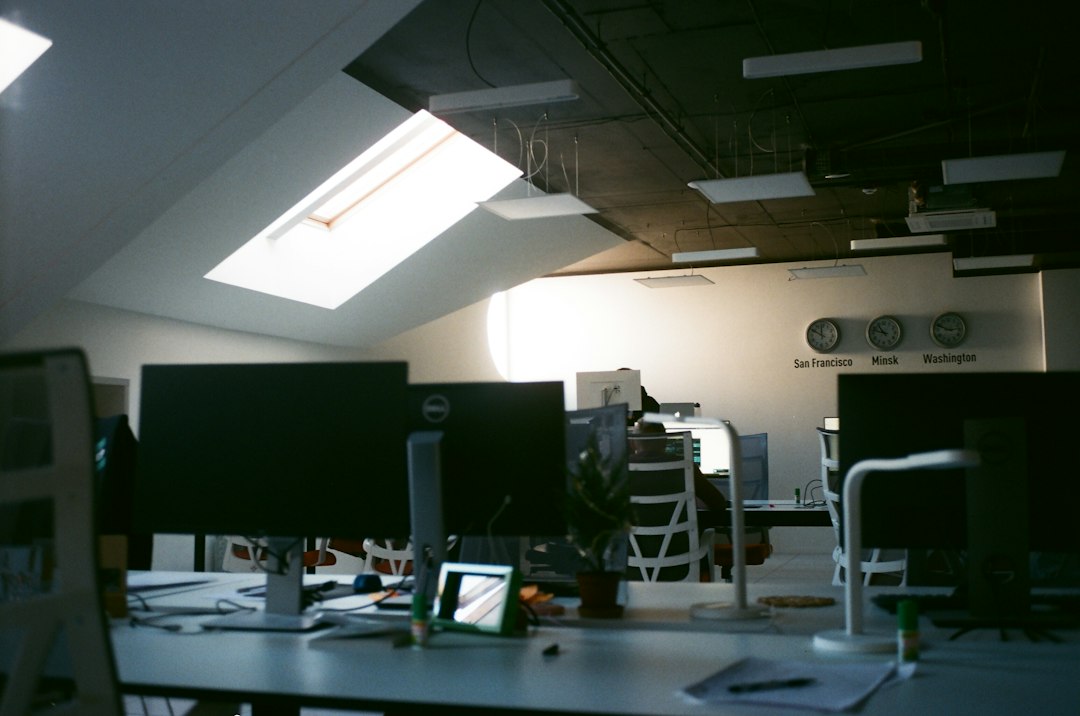
You've decided you need professional indoor air quality testing. Maybe staff have been complaining of headaches and fatigue. Maybe there was a water leak six weeks ago and something smells off. Maybe your building is due for a routine compliance check and you want numbers on paper before the audit. The question now is not whether to test, it's what you are actually buying when you engage an indoor air quality testing service.
That distinction matters more than most facility managers expect. A lot of providers will sample your air, hand you a PDF, and walk out. The report lists readings. The readings mean something only if someone can tell you what they mean, and what to do when a value sits outside an acceptable range. At Big Red, we run the tests and remediate the problems we find, both in-house, with accredited technicians.
Why this matters: A report that names a problem without a clear remediation path leaves you carrying the risk, with no way to show the building is actually fixed.
Highlights
- Indoor air quality testing measures CO2, VOCs, formaldehyde, PM2.5, mold spores, temperature and relative humidity against Singapore building standards.
- Testing is carried out by in-house technicians accredited by the RIA, IAQA, IICRC, bizSafe3 and CRI, never sub-contracted.
- Results are delivered as a structured report with readings mapped to accepted reference ranges, so pass and fail values are clear at a glance.
- Where a reading fails, Big Red provides remediation in-house: mold removal, air duct cleaning, virus disinfection, or foul odor treatment, depending on the cause.
- BioProtect, an EPA-registered, NSF-D2 antimicrobial coating, can be applied after remediation and self-disinfects for up to 90 days.
- Same-day and 24/7 emergency response available for urgent assessments.
What the testing service actually measures
A professional IAQ assessment does not just measure "air quality" in the abstract. It measures specific contaminants and environmental parameters, each of which points to a different source and requires a different fix.
The six main parameters
Most commercial IAQ testing services in Singapore cover the following:
- Carbon dioxide (CO2): elevated CO2 in a sealed, air-conditioned office is usually a ventilation problem. It is one of the most common findings in packed open-plan floors.
- Volatile organic compounds (VOCs): off-gassing from furniture, adhesives, paint, cleaning products and renovation materials. New fitouts often spike VOC readings for weeks after completion, as covered in our guide to air quality testing after a Singapore renovation.
- Formaldehyde: a specific VOC worth singling out because it is common in composite wood furniture and flooring and carries its own reference limit under most building standards.
- Particulate matter (PM2.5): fine particles from HVAC systems, construction dust, or outdoor infiltration. Elevated PM2.5 often points to duct contamination or a failing filter.
- Mold spores: airborne spore counts measured against acceptable background levels. A count above the reference range confirms active mold growth somewhere in the building, even if you cannot see it visually. Our article on mold spore air testing and what the results actually tell you goes deeper on interpreting spore counts.
- Temperature and relative humidity (RH): not contaminants in themselves, but the conditions that drive all of the above. Singapore's climate means RH inside a building that loses cooling efficiency can climb fast, and mold begins colonizing surfaces once RH sits above 70% consistently.
Where samples are taken and how
Sampling points are agreed before the visit. For a commercial floor, that typically means the HVAC supply and return zones, any enclosed meeting rooms, server or storage rooms, and areas where complaints have been reported. We use calibrated instruments for real-time readings and collection media for lab-analyzed parameters (spore counts and some VOC panels require lab analysis to be accurate). The number of sampling points scales with the floor area and the level of detail the report needs to support.
How the report is structured
This is where indoor air quality testing services vary most. A good report is not a table of numbers. It tells you what was found, whether each reading is within the accepted reference range, and what the likely source is for any reading that falls outside it.
|
Parameter |
What a pass/fail reading tells you |
Likely remediation if it fails |
|---|---|---|
|
CO2 |
Ventilation rate is adequate / insufficient for occupancy |
HVAC inspection and balancing, air duct cleaning |
|
VOCs / formaldehyde |
Off-gassing within / above safe limits |
Source removal, increased ventilation, BioProtect coating |
|
PM2.5 |
Particulate load is acceptable / elevated |
Duct cleaning, filter replacement, source investigation |
|
Mold spores |
Airborne spore count within / above background |
Mold removal and remediation, post-remediation retest |
|
Relative humidity |
RH is controlled / elevated |
HVAC servicing, dehumidification, moisture source investigation |
The report also records the sampling methodology, instrument calibration status, the date and time of each reading, and the reference standard used. For most commercial buildings in Singapore, readings are compared against the guidelines published for office and commercial buildings. This gives you a document you can show to a building owner, a regulator or an insurer.
What happens after a failed reading
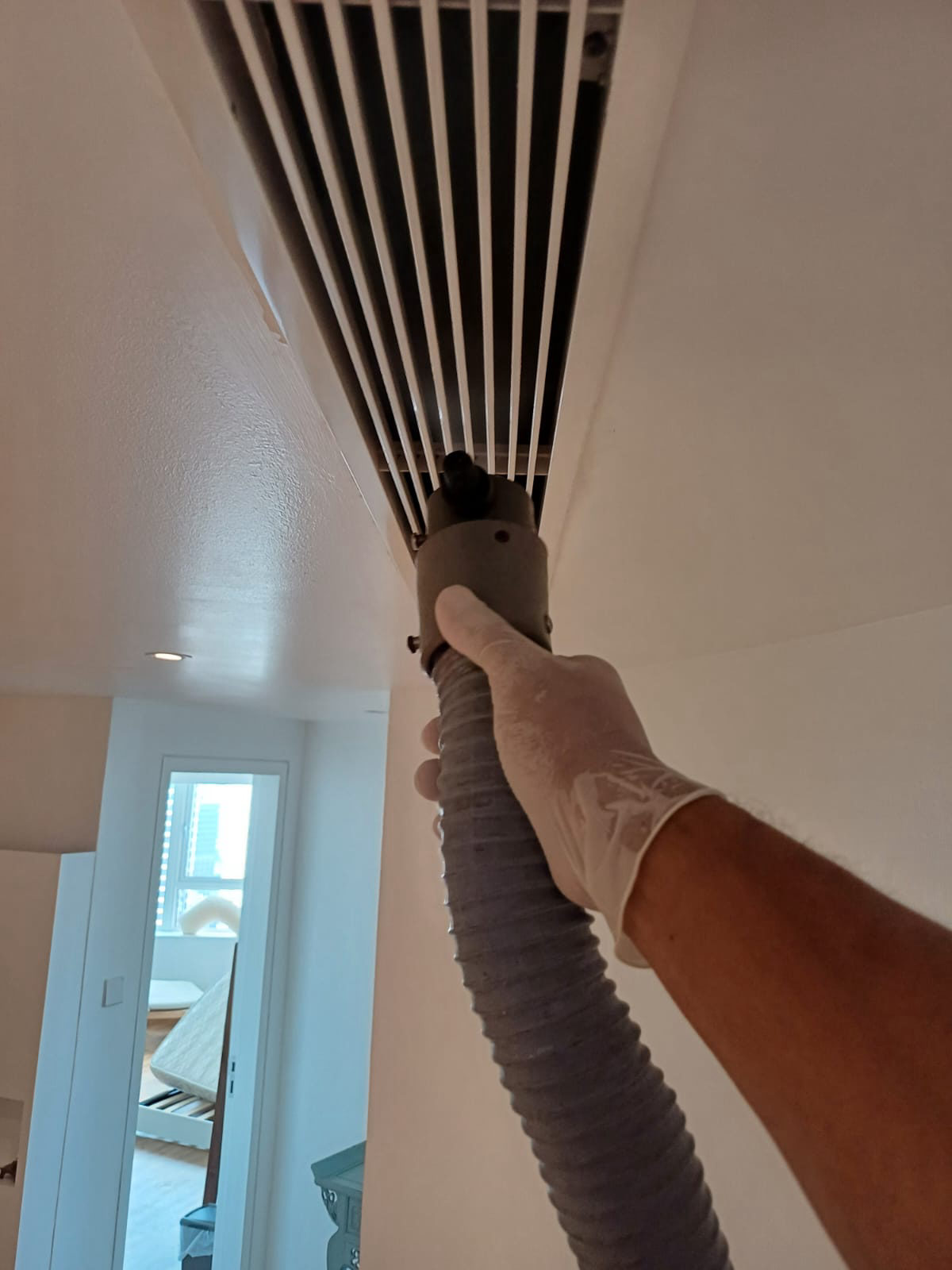
This is the part most IAQ testing providers do not cover, because most of them only test. If your PM2.5 comes back elevated, someone has to clean the ducts. If your spore count is high, someone has to find the mold and remove it. If formaldehyde is above the limit, the source has to be identified and either removed or treated.
The value of working with a provider who both tests and remediates is that the remediation plan comes from the same team that read the data. There is no gap between the tester who wrote the report and the contractor who has to act on it.
The post-report workflow
When a reading fails, the next steps depend on the contaminant:
- Identify the source. High spore counts need a mold inspection to locate active colonies, which are often hidden inside wall cavities, ceiling voids, or the ductwork itself. Elevated VOCs need the likely sources (new furniture, recent renovation materials) investigated first before treatment is considered.
- Remediate. Mold is removed at the source, not just wiped off surfaces. Duct contamination calls for HVAC duct cleaning, which is a different scope from a standard filter change. Persistent odors linked to bacteria or biological material are addressed with our foul odor treatment service.
- Apply post-remediation protection where it fits. After mold remediation or disinfection, BioProtect, the EPA-registered, NSF-D2 quaternary organo-silane antimicrobial surface coating, bonds to treated surfaces and keeps self-disinfecting for up to 90 days. That does not replace the fix, but it gives the surface ongoing protection while the building stabilizes.
- Retest. A post-remediation IAQ test confirms the readings have returned to acceptable levels. Without a retest, you have no documented evidence the problem was resolved. For a facility manager presenting results to a building owner or signing off on an audit, that verification is the record you need.
As UL Solutions notes, prompt reactive services for building engineers and managers are most effective when the same engagement covers the HVAC inspection and the source investigation together, not as separate scopes.
When you can address it yourself and when to call us
Some findings have straightforward fixes a facilities team can handle: a fresh cabin filter on an FCU unit, improved ventilation scheduling, replacing a piece of furniture that is off-gassing. If the CO2 reading is borderline and the building management system shows an AHU running at reduced capacity, that is a maintenance ticket, not a remediation job.
But high spore counts, elevated formaldehyde that persists after a fitout, and PM2.5 that keeps climbing despite filter changes all point to sources that need professional investigation. Mold that has grown into plasterboard or inside a duct system cannot be resolved with a surface wipe, and results depend on how far contamination has spread and how long the conditions that caused it have been present. In those cases, a combined test-and-remediate approach is faster and produces a cleaner audit trail than coordinating two separate contractors.
For Singapore office and facility managers dealing with a sick-building complaint or a mold scare, our article on what a decontamination service does in a Singapore office covers the broader workflow, and what indoor air quality testing after a mold scare looks like in practice walks through the office-specific steps.
Frequently asked questions
What contaminants does a commercial IAQ test cover?
A standard commercial assessment covers CO2, VOCs, formaldehyde, PM2.5, mold spores, temperature and relative humidity. For buildings with specific concerns (Legionella risk in cooling towers, post-renovation chemical off-gassing, or elevated biological load after water damage) the sampling panel can be extended to cover those parameters specifically.
How long does an IAQ testing visit take for an office floor?
For a single commercial floor of typical size, the on-site visit runs two to four hours, depending on the number of sampling points and whether any parameters require extended sampling periods. Lab-analyzed results (mold spore counts, detailed VOC panels) come back within a few working days; real-time instrument readings are available on the day.
Does a failed IAQ reading mean the building is unsafe to occupy?
Not automatically. A reading above the reference range flags a problem worth investigating and addressing, but the severity depends on the contaminant, the magnitude of the exceedance, and how long staff have been exposed. The report puts the readings in context. What we never do is describe a reading as meaning the air is safe or unsafe for any individual's health: what we can say is whether the air meets or exceeds accepted building standards for that contaminant.
How soon after remediation should we retest?
For mold remediation, a retest is typically carried out 48 to 72 hours after the work is complete, once the area has been cleared and ventilated. For VOC remediation after a renovation, it depends on the off-gassing rate of the materials involved, but a retest two to four weeks after the source is addressed gives a more reliable reading than one done immediately after. We advise on the right timing case by case.
Can we use IAQ testing results for regulatory compliance or audit documentation?
Yes. The report includes the methodology, calibration records, sampling point locations, readings, reference standards, and a clear pass/fail assessment for each parameter. That format is designed to serve as supporting documentation for building audits, management system certifications, or tenant fit-out sign-offs. If a specific format is required for a particular audit, let us know before the visit so we can structure the output accordingly.