
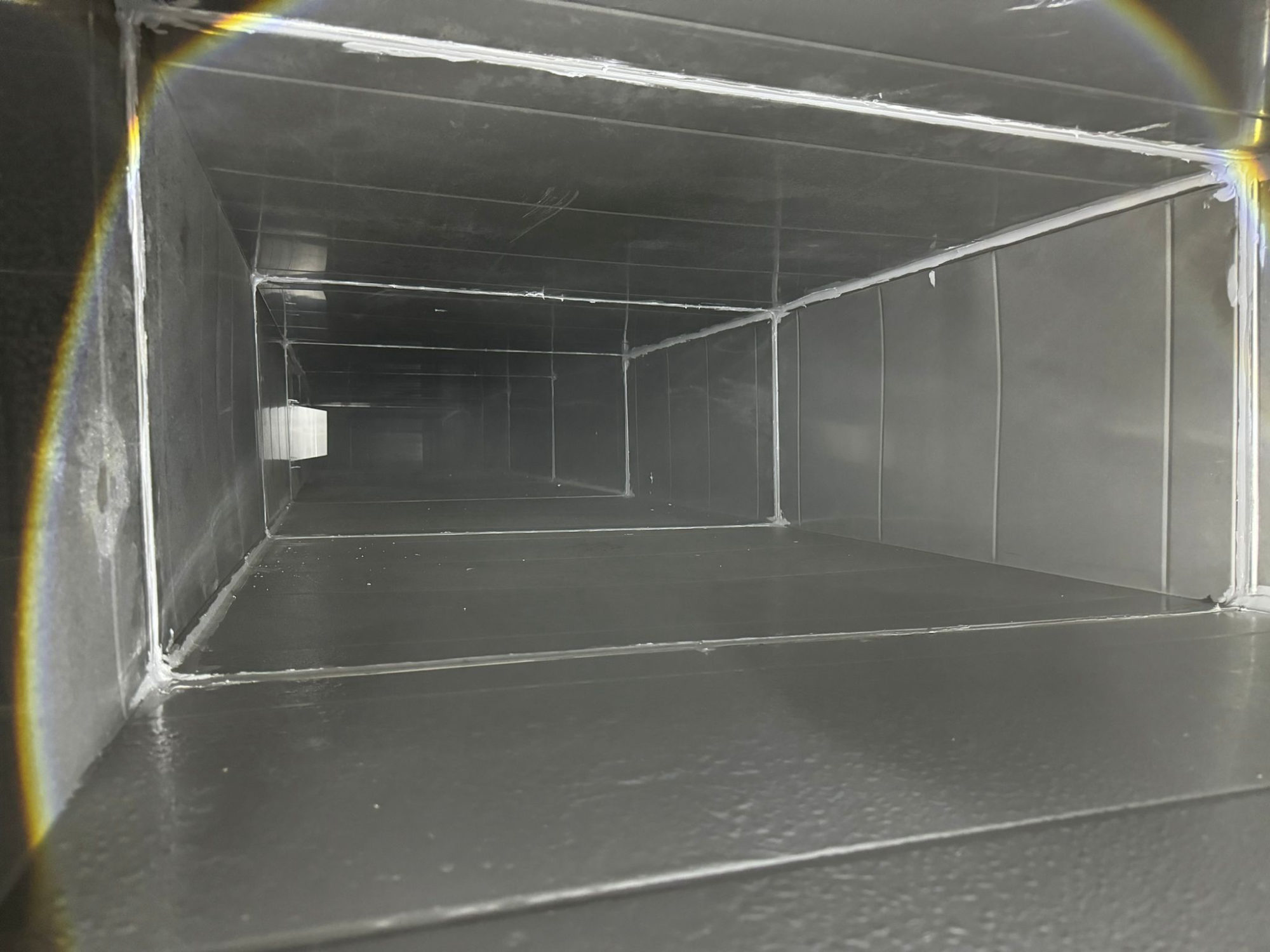
The kitchen smells fine at the start of service. By mid-afternoon, there is a grease-and-char odor drifting into the dining area, and by the time the last table turns, the whole restaurant carries it. You have cleaned the hood, scrubbed the filters, wiped every surface. The odor keeps coming back.
In most Singapore restaurant kitchens, the answer is inside the exhaust duct. Grease vapors travel with the hot air drawn out of the kitchen, and they cool and condense on the duct walls as they rise. Over time that film becomes a thick, rancid layer. No surface clean touches it. And because it sits inside a sealed duct run, it keeps releasing odor into the air every time the exhaust fan runs.
This is not a housekeeping problem. It is an infrastructure problem, and it needs to be treated as one.
Why this matters: Grease-laden exhaust ducts are the single most common hidden source of persistent restaurant kitchen odor in Singapore, and the same buildup that drives the smell also creates real fire and regulatory risk that surface cleaning cannot address.
Highlights
- Grease condensed inside exhaust ducts is the root cause of most recurring restaurant kitchen odors, not surface contamination.
- Professional air duct and HVAC cleaning removes the grease at the source using mechanical agitation and extraction, not just chemical spray.
- Grease-laden ducts are a documented fire hazard and a NEA hygiene compliance risk for food-service operators.
- After cleaning, a BioProtect antimicrobial coating can be applied to accessible duct surfaces to slow biofilm and odor-causing bacteria for up to 90 days.
- In-house technicians accredited by RIA, IAQA, IICRC, bizSafe3 and CRI; same-day and 24/7 emergency response available.
Why grease accumulates no matter how often you clean
The kitchen exhaust system is designed to pull grease-laden air out of the cooking space. Filters catch some of the larger grease particles, but vapor-phase grease passes straight through and condenses on the duct interior. The further up the duct run it travels, the cooler the surface and the more readily it sticks.
The filter is not the end of the line
Most restaurant operators clean or replace canopy filters on a regular schedule. That is necessary, but it addresses only the first meter of the system. The duct behind the filter, the bends, the vertical shaft and the rooftop fan housing all accumulate grease at the same time. After six to twelve months of service, a heavily used commercial kitchen can have a grease layer several millimeters thick coating every surface inside the duct run.
That layer is the odor source. Rancid, oxidized grease has a persistent smell that travels easily, and every time the exhaust fan operates it carries those odor compounds back into the kitchen and, through gaps and negative pressure, into the dining space.
Singapore's humidity makes it worse
In a tropical climate, grease residue does not just sit inert on the duct wall. It absorbs moisture from the humid air, creating a sticky film that is ideal for bacterial and mold growth. Biofilm colonies in a grease-coated duct produce their own odor compounds on top of the rancid-grease base note. That combination is what makes restaurant kitchen odor disinfection in Singapore more than just a cleaning task: the biological layer needs to be addressed, not just the grease.
The fire risk and compliance reality
Odor aside, grease accumulation in exhaust ducts is a documented fire hazard. The Singapore Civil Defence Force (SCDF) and NEA both include kitchen exhaust systems in their inspection and compliance frameworks for food-service premises. A duct carrying a thick grease deposit is a fuel source: if a grease fire starts at the cooking surface and the exhaust fan is running, the fire can travel up the duct shaft and spread to areas of the building that are otherwise protected.
For F&B operators and facility managers, the compliance argument is straightforward. A cleaning record that covers only the hood and filters, and not the duct interior, will not satisfy an inspection that asks for evidence of full exhaust system maintenance. Professional duct cleaning generates a service report that documents what was found, what was removed and the condition of the system after cleaning. That record matters if you ever need to demonstrate due diligence.
What a professional clean actually involves
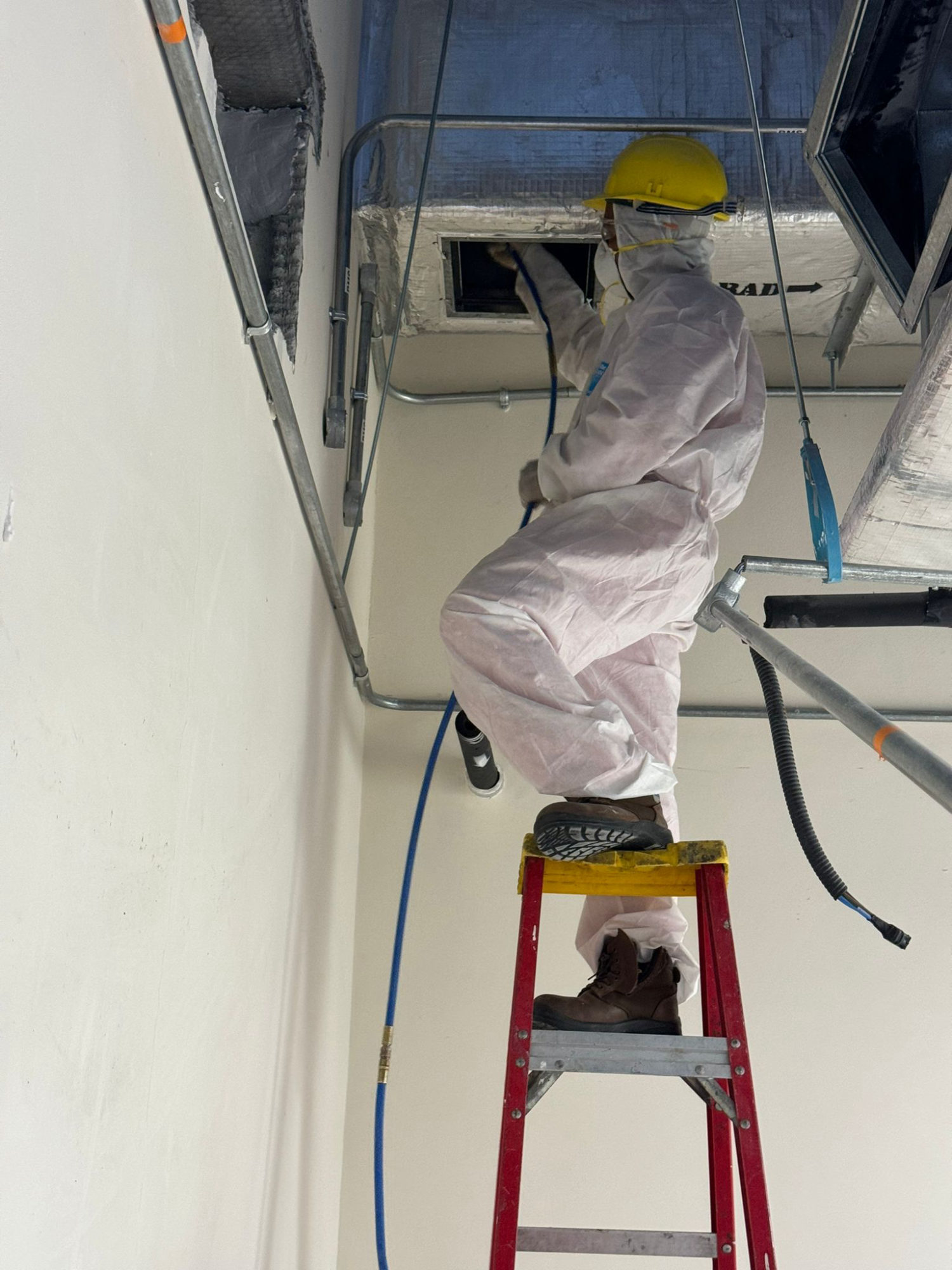
Professional kitchen exhaust duct cleaning is a mechanical process, not a spray-and-wipe. The technician accesses the duct at inspection hatches, uses rotary brushes or pneumatic agitation tools to break the grease deposit from the duct walls, and then vacuums or extracts it. For heavy accumulations, a solvent-based degreaser is applied with dwell time before mechanical agitation.
The steps, in order:
|
Stage |
What happens |
|---|---|
|
Inspection |
Duct interior assessed for grease depth, blockages and structural condition |
|
Protection |
Kitchen surfaces, equipment and dining areas covered or sealed |
|
Mechanical agitation |
Rotary brushes or pneumatic tools break grease deposits from duct walls |
|
Extraction |
Dislodged grease vacuumed out; solvent degreaser applied where needed |
|
Fan housing clean |
Rooftop or inline fan impeller and housing cleaned |
|
Post-clean inspection |
Technician confirms duct walls are clean and access hatches resealed |
|
Documentation |
Service report issued with before/after findings |
The whole system, hood, filters, duct interior, fan housing, needs to be cleaned together. Cleaning any single component while leaving the others dirty just shifts the problem.
Odor treatment after the duct is clean
Once the grease is removed, a residual odor problem is often a bacterial one. The duct walls, and the kitchen surfaces immediately below the canopy, may carry biofilm that keeps producing odor even after the primary grease source is gone. This is where foul odor treatment works alongside the duct clean: an antimicrobial treatment applied to accessible surfaces after cleaning targets the bacterial layer directly, not just the smell.
For accessible duct surfaces, we can apply BioProtect, our EPA-registered, NSF-D2 antimicrobial coating, which keeps self-disinfecting for up to 90 days. It bonds to the cleaned surface and suppresses the microbial regrowth that drives odor between cleaning cycles. It does not replace the next scheduled duct clean, but it reduces how fast the biological layer re-establishes itself.
For the broader kitchen environment, high-touch surfaces, preparation areas, cold rooms, virus disinfection using a hospital-grade disinfectant that kills 99.999% of bacteria including E. coli and Salmonella in under 60 seconds rounds out a complete restaurant kitchen odor disinfection program.
When to call a professional and when you can handle it yourself
Hood filters: clean them on your own schedule. That is a routine maintenance task any kitchen team can handle.
Duct interior: this is not a DIY job. You cannot reach a duct run effectively without access hatches, and the mechanical agitation needed to break a thick grease deposit requires specialist equipment. Spraying a degreaser into the duct opening and leaving it does not remove the grease; it runs down the duct wall and pools in low points.
The honest answer on frequency: a high-volume commercial kitchen in Singapore, running wok and charcoal cooking, will need the duct cleaned every three to six months. A café or lower-heat kitchen might go twelve months between cleans. The actual grease depth at inspection tells you more than any fixed schedule does. If the technician finds a deposit more than a millimeter thick anywhere in the run, the cleaning is overdue.
For a broader look at how professional duct maintenance works in a commercial context, the guide to HVAC duct cleaning for commercial buildings covers the process in more detail. And if the kitchen odor has already spread to the dining room air, an indoor air quality (IAQ) test can confirm what contaminants are present in the air itself, not just on the surfaces.
Related: see why Google, DBS Bank and JW Marriott trust Big Red with their indoor environments.
Frequently asked questions
How often should a Singapore restaurant have its kitchen exhaust ducts professionally cleaned?
High-volume kitchens running wok, charcoal or deep-fry cooking should typically clean every three to six months. Lower-heat operations, cafés, sandwich counters, lighter cooking, can usually go six to twelve months. Grease depth at inspection is the real guide: if the deposit is more than a millimeter thick anywhere in the run, cleaning is overdue regardless of the calendar.
Will cleaning the exhaust duct remove the kitchen odor for good?
Removing the grease deposit removes the primary odor source, and in most cases the persistent kitchen smell drops significantly after a full duct clean. If a residual odor remains, it is usually a biofilm issue on the duct walls or surrounding kitchen surfaces. A follow-up antimicrobial treatment, or BioProtect coating on accessible duct surfaces, addresses that layer. Results depend on how thick the accumulation is and how long it has been there.
Is restaurant kitchen odor disinfection in Singapore a regulatory requirement?
NEA and SCDF both cover kitchen exhaust systems in their frameworks for food-service premises. A clean exhaust duct reduces fire risk and supports hygiene compliance. We issue a detailed service report after every clean, which documents the pre- and post-clean condition of the system and provides a maintenance record for any inspection.
Can you clean a kitchen exhaust duct without shutting down the restaurant?
In most cases, yes, by scheduling the work outside operating hours. For a heavily fouled duct, we protect kitchen surfaces and cover equipment before starting, and the work area is cleared and restored before service. We can advise on timing after an initial inspection, which is usually the right first step for any kitchen that has not been professionally cleaned in over a year.
What is the difference between cleaning the hood filters and cleaning the duct?
Filters catch the larger grease particles at the entry point of the exhaust system. The duct behind the filter, the bends and the fan housing accumulate grease independently, and that accumulation is not affected by filter changes. A professional duct clean covers the full system from canopy to fan discharge; filter maintenance alone leaves the rest of the run untouched.