
You have probably already decided that a one-time disinfection is not enough. A persistent contamination problem, an IAQ complaint that keeps returning, or a post-illness scare in your building has you looking at antimicrobial surface coatings that stay active between cleaning cycles. Two names keep coming up in that search: Aegis Microbe Shield and BioProtect.
Both use a quaternary organo-silane chemistry that bonds to surfaces and keeps working after the spray dries. But the certifications, the safety profile, the claimed duration and the service model behind each product differ in ways that matter when you are responsible for a Singapore office, hotel, clinic or food-and-beverage facility.
This is a straight comparison of what each coating actually does, how the key specifications stack up, and what questions to ask before you sign off on a purchase order.
Why this matters: The antimicrobial coating you choose stays on your surfaces for weeks or months, so the certification, safety profile and service support behind it matter far more than the product brochure suggests.
Highlights
- Both Aegis Microbe Shield and BioProtect use quaternary organo-silane chemistry to bond to surfaces and remain antimicrobially active after application.
- BioProtect (the BIOPROTECTUs™ System) is EPA-registered and NSF-D2 certified, meaning it is independently cleared for use on food-contact surfaces with zero triclosan, heavy metals, arsenic or phenols.
- BioProtect self-disinfects for up to 90 days; in a Singapore facility that is 90 days of surface protection between scheduled treatments.
- Big Red Environmental applies BioProtect using in-house RIA-, IAQA-, IICRC-, bizSafe3- and CRI-accredited technicians, never sub-contracted.
- An indoor air quality (IAQ) test before any coating decision tells you whether you have a surface problem, an airborne problem, or both.
How the two coatings compare
The chemistry they share
Aegis Microbe Shield and BioProtect both rely on a cationic quaternary organo-silane compound that forms a covalent bond with the surface it is applied to. Once cured, the coating presents a layer of positively charged molecular spikes. Microbial cells, which carry a negative charge, are attracted to the surface, punctured on contact and destroyed. No cell can build resistance to a mechanical kill mechanism, which is one reason this chemistry has attracted serious regulatory attention.
That shared chemistry is why both products are marketed with the same headline claim: long-term surface protection that keeps working between cleaning cycles. The difference is in what independent bodies have verified about each product, and under what conditions.
Where they diverge: certifications and safety profile
This is where a Singapore facility manager needs to read carefully.
BioProtect (the BIOPROTECTUs™ System) carries two certifications that carry real procurement weight:
- EPA registration: the US Environmental Protection Agency has reviewed the formulation, the efficacy data and the label claims. An EPA-registered biocide has gone through independent scientific scrutiny, not just manufacturer testing.
- NSF-D2 certification: NSF International certifies BioProtect for use on food-contact surfaces. In a hotel kitchen, an F&B outlet, a hospital canteen or a school cafeteria, that certification is the difference between a coating you can legally apply to a prep surface and one you cannot. BioProtect contains zero triclosan, zero heavy metals, zero arsenic and zero phenols, the formulation is designed for occupied, food-safe environments.
Aegis Microbe Shield has its own EPA registration for certain formulations, but the NSF-D2 food-contact clearance and the specific zero-triclosan, zero-heavy-metals formulation are points of differentiation worth verifying directly with any supplier before applying a coating near food preparation or in a healthcare setting.
Key takeaway: Ask any supplier to produce the registration certificate and the safety data sheet, not just the product brochure. The label and the SDS will tell you what the formulation actually contains and what surfaces it is cleared for.
|
Criterion |
Aegis Microbe Shield |
BioProtect (BIOPROTECTUs™) |
|---|---|---|
|
Chemistry |
Quaternary organo-silane |
Quaternary organo-silane |
|
EPA registration |
Yes (certain formulations) |
Yes |
|
NSF-D2 food-contact clearance |
Verify with supplier |
Yes |
|
Triclosan / heavy metals |
Verify with SDS |
Zero (confirmed) |
|
Claimed active duration |
Up to 90 days (varies by formulation) |
Up to 90 days |
|
Singapore service provider |
Varies |
Big Red Environmental (in-house technicians) |
|
Technician accreditation |
Varies by applicator |
RIA, IAQA, IICRC, bizSafe3, CRI |
Duration and surface compatibility
Both products claim protection of up to 90 days under normal conditions. The honest caveat for any coating is that duration depends on the substrate, the level of traffic on that surface, and how frequently it is cleaned with chemicals that could degrade the bond. High-traffic touchpoints, lift buttons, door handles, countertops, see more mechanical abrasion than a wall panel, so real-world duration on those surfaces is shorter than the lab figure.
BioProtect bonds to both porous and non-porous surfaces: fabric, carpet, wood, metal, glass and treated paper. That range matters in a mixed-use facility where a single treatment round covers upholstered seating, hard counters and soft furnishings without switching products. If your facility has a complex surface mix, confirm that any competing product matches that compatibility before committing.
The service model matters as much as the product
A coating is only as good as the application. Quaternary organo-silane products need correct dwell time, surface preparation and coverage rate to bond properly. Applied too thin, or over a surface that has not been disinfected first, the coating will not perform to its specification.
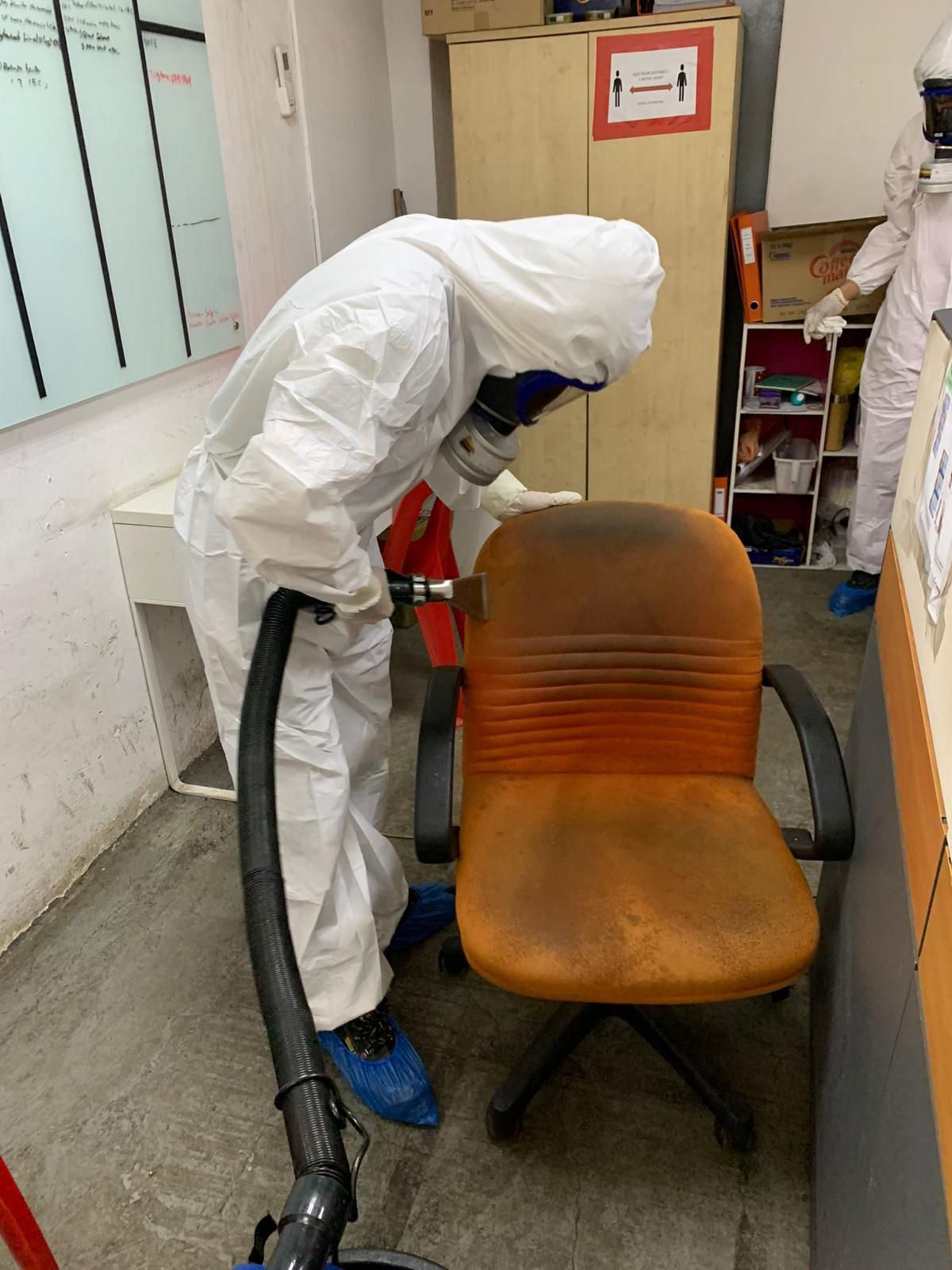
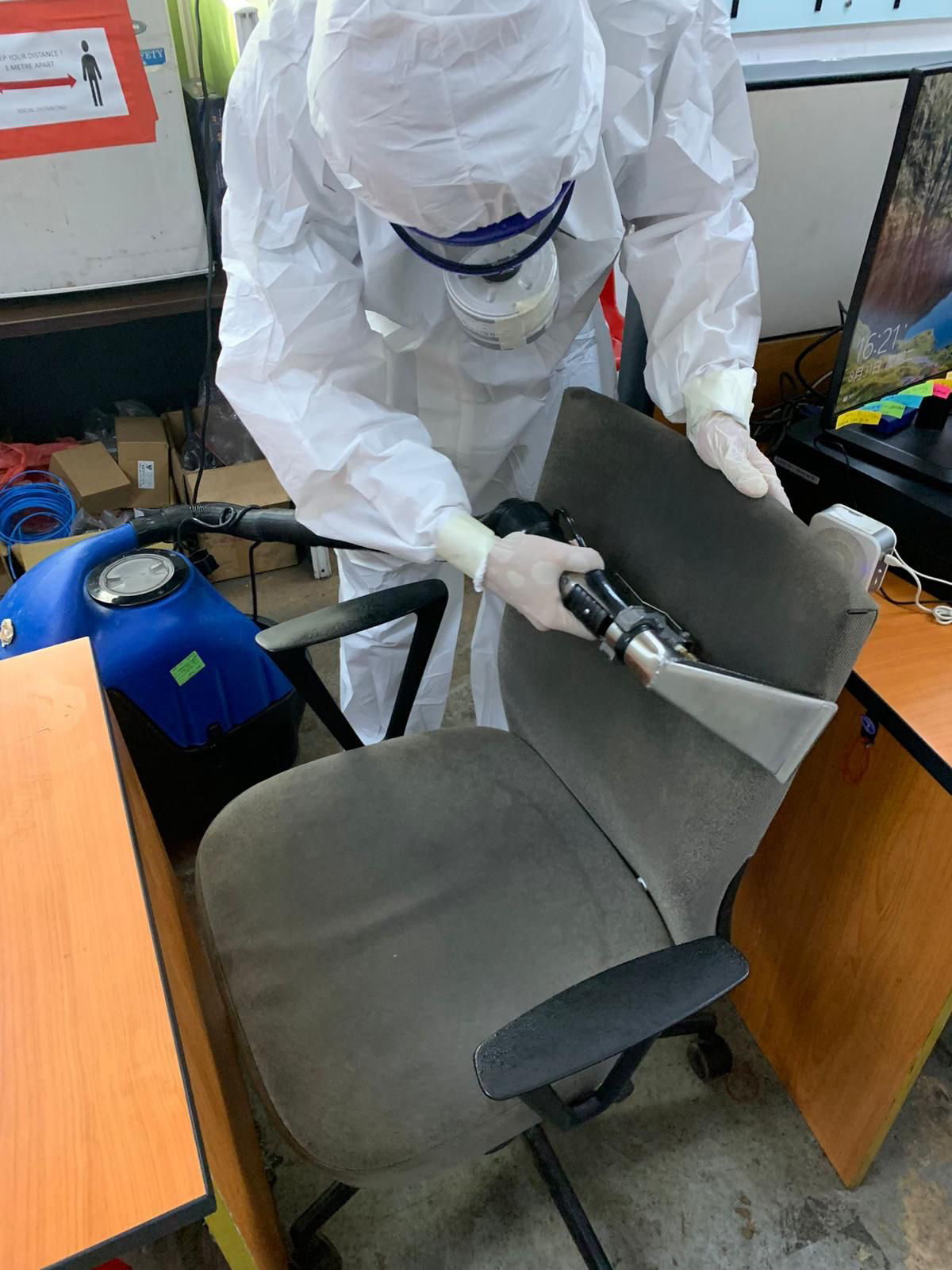
Big Red Environmental applies BioProtect as a paired service: a hospital-grade disinfection that kills 99.999% of bacteria including E. coli and Salmonella in under 60 seconds comes first, then the BioProtect coating is applied to the clean surface. The disinfection removes the existing microbial load; the coating handles what accumulates afterward. Our technicians are in-house, RIA-, IAQA-, IICRC-, bizSafe3- and CRI-accredited, and we never sub-contract, so the same standards apply on every job.
If you source Aegis Microbe Shield through a distributor, ask specifically who applies it, what their accreditation is, and whether they also do the pre-treatment disinfection or leave that to you.
When a coating is the right next step, and when it is not
An antimicrobial surface coating addresses what accumulates on surfaces. It does not address airborne contamination, mold in walls or ductwork, or VOCs and formaldehyde from renovation materials. If your facility has IAQ complaints, staff reporting headaches, a persistent musty smell, or a pattern of illness following a renovation or a water leak, a coating applied over an undiagnosed air problem will not resolve those complaints.
The right sequence is:
- Diagnose first. An indoor air quality test measures particulates, VOCs, formaldehyde, CO2 and microbial load in the air. It tells you whether the problem is surface-borne, airborne, or both, and gives you a baseline to measure results against.
- Remediate what exists. If there is mold, mold removal and remediation needs to happen before any surface coating. A coating over mold does not encapsulate it reliably; the mold continues to grow underneath.
- Disinfect, then coat. Hospital-grade disinfection removes the existing surface load. BioProtect then protects the clean surface for up to 90 days.
- Test again. A post-treatment IAQ test confirms the outcome rather than relying on a visual check or the technician's word.
For a facility that has already dealt with a confirmed illness event or a contamination cluster, pairing the coating decision with a virus disinfection and decontamination service first is the more defensible sequence, particularly if you need to document the response for management, insurers or regulators.
A Singapore office that went through a similar diagnostic sequence is described in detail in our article on what a decontamination service actually does in a Singapore office, worth reading if you are managing a sick-building complaint rather than a routine hygiene upgrade.
What you can manage in-house
Routine surface hygiene, wiping high-touch points with a hospital-grade disinfectant daily, remains your first line of defence and a coating does not replace it. What a coating does is reduce the rate at which surfaces become re-contaminated between cleaning rounds, which is genuinely useful in a high-traffic building where cleaning frequency is limited by operational hours.
Applying the coating yourself without professional equipment and surface preparation is where the risk lies. An improperly applied product that has not bonded correctly gives you the cost of the coating and none of the protection.
Frequently asked questions
What is Aegis Microbe Shield and how does it compare to BioProtect?
Aegis Microbe Shield is a quaternary organo-silane antimicrobial surface coating that bonds to surfaces and remains active after drying, using a mechanical rather than chemical kill mechanism. BioProtect (the BIOPROTECTUs™ System) uses the same chemistry and is additionally EPA-registered and NSF-D2 certified for food-contact surfaces, with a confirmed zero-triclosan, zero-heavy-metals formulation. For Singapore facilities where food-contact or healthcare use is relevant, that NSF-D2 clearance is a meaningful difference.
How long does an antimicrobial coating actually last in a busy Singapore facility?
Both products claim up to 90 days under normal conditions. In a high-traffic facility, expect real-world duration on the most-touched surfaces, lift buttons, door handles, reception counters, to be shorter, because mechanical abrasion and chemical cleaning degrade the bond over time. A periodic re-application schedule, rather than a one-off treatment, is the realistic maintenance model.
Should I test indoor air quality before applying an antimicrobial coating?
Yes, particularly if you have ongoing IAQ complaints or a history of water damage or mold. A coating treats surfaces; it does not address airborne spores, VOCs or HVAC contamination. An IAQ test identifies what you are actually dealing with so the treatment matches the problem. Applying a coating over an undiagnosed mold or air-quality issue typically does not resolve the complaints staff are reporting.
Is BioProtect safe to apply in an occupied office or food facility?
Yes. BioProtect is NSF-D2 certified for food-contact surfaces and contains zero triclosan, heavy metals, arsenic or phenols. It is applied after the initial hospital-grade disinfection has been completed and the space has been cleared. Most commercial jobs can resume normal use the same day. We advise on any specific clearance time based on the surfaces treated and the ventilation in the space.
Can I apply an antimicrobial coating over existing mold?
No. Mold that has penetrated porous surfaces, plasterboard, ceiling tiles, grout, timber, needs to be removed at the source before any coating is applied. A coating layered over mold does not reliably contain it; the colony continues to grow and the coating will eventually fail. The correct sequence is inspection, remediation, disinfection, then coating. Our article on what a mold inspection actually finds inside Singapore walls explains why a visual check alone is not enough before committing to any surface treatment.